Amtrak Sleeper Car Guide for Adventurous Travelers: Discover Exceptional Comfort on Every Journey
A long-distance train can look like a bargain until you realize that a coach seat for two nights is not the same thing as a bed. That is where an Amtrak sleeper car guide becomes useful. A private room turns the trip from a mere mode of transportation into a slow-travel experience, but it is not necessarily the best use of your vacation budget.
For travelers who would rather spend on national parks, local meals, and unusual overnight stays than a flashy upgrade, the honest answer is: it depends. A sleeper can be tremendous value on the right route and at the right price. On a short daytime journey, it can be an expensive way to get a door and a slightly wider seat.
This post may contain affiliate links. Please read our disclosure and privacy policy for more information.
What You Actually Get in an Amtrak Sleeper Car
When you book a sleeper, you pay the regular rail fare plus an accommodation charge for the room. That charge covers the room for one or two passengers, depending on the room type, and it typically includes meals in the dining car for all registered occupants. Sleeping-car passengers also receive attendant service, bedding, towels, and access to showers where applicable.
You may also get priority boarding and access to select station lounges before departure. Do not plan your whole airport-style lounge strategy around this, though. Lounge access and services vary by station, and not every stop has a lounge worth arriving early for.
The biggest benefit is privacy. You can close the door, stretch out, nap without an audience, and avoid spending hours guarding your bag while trying to sleep upright. On an overnight route, that has real value.
Amtrak Sleeper Car Guide: Which Room Should You Book?
Amtrak’s sleeper inventory differs by train, but most choices fall into a few familiar categories. The cars matter: Superliner trains use two-level cars on many western routes, while Viewliner trains operate on several eastern overnight routes.
Roomette
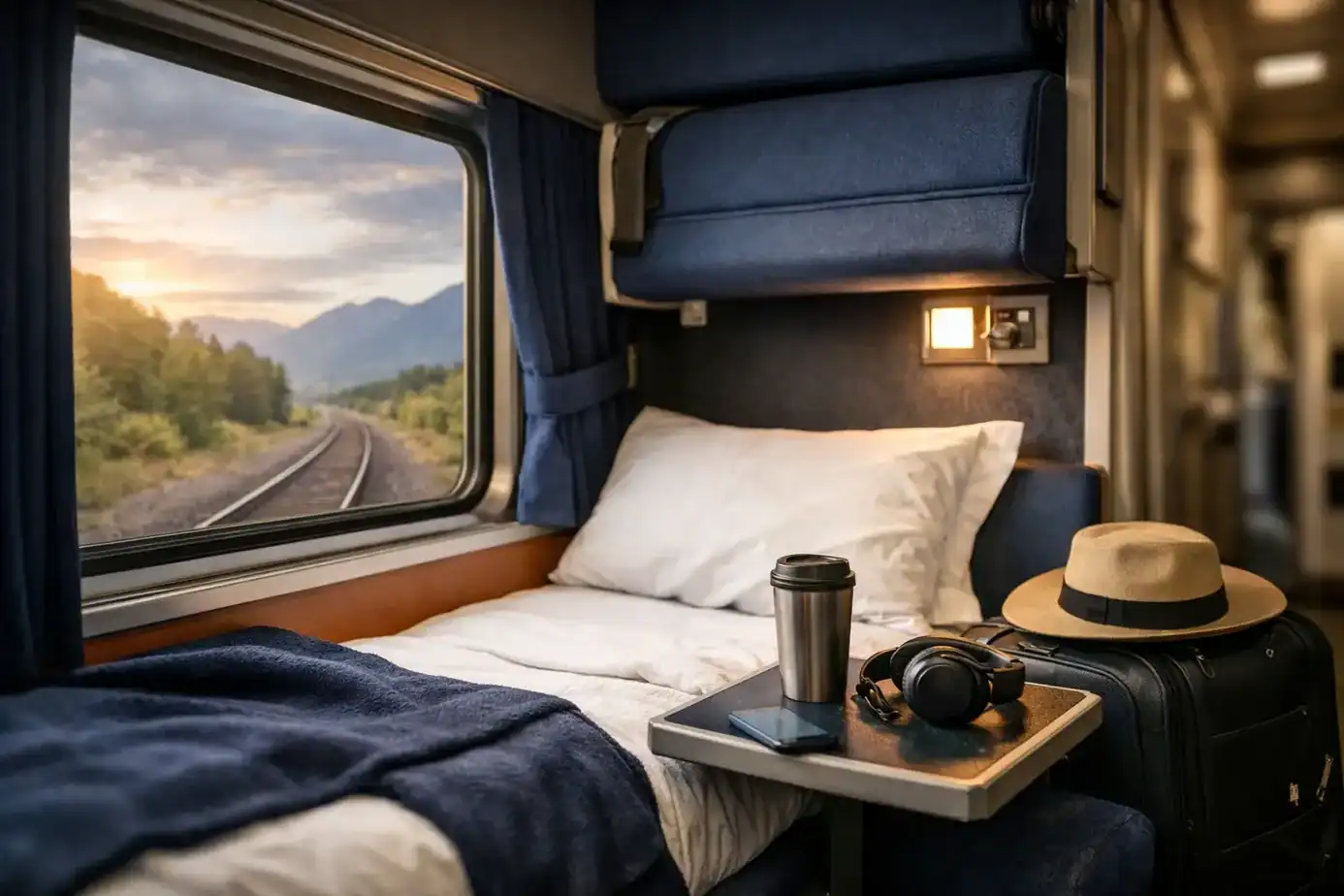
A Roomette is Amtrak’s smallest and often smartest sleeper choice for one person or a close-traveling pair. During the day, it has two facing seats; at night, they convert into a lower berth, with an upper bunk folded down above it. There is a door, a window, climate controls, outlets, reading lights, and a small amount of storage.
The catch is space. Two adults can fit, but they need to be comfortable changing clothes in tight quarters and climbing over luggage. On Superliner trains, Roomette passengers use shared restrooms and showers in the car. On newer Viewliner equipment, Roomette rooms generally include an in-room toilet, though shower arrangements still vary.

For a solo traveler, a Roomette is often the sweet spot. It gives you privacy, a flat bed, included meals, and a memorable rail experience without the steepest price tag.
Bedroom
A Bedroom provides more floor space and a wider lower bed, usually with an upper berth as well. It has an enclosed toilet and shower, making it much easier for travelers who value privacy or do not want to navigate a moving train in the middle of the night.

This is the better fit for couples who need breathing room, travelers with mobility concerns that do not require the accessible room, or anyone taking a two-night journey. It is also significantly more expensive. If the Bedroom costs only a modest amount more than a Roomette, especially for two passengers, it can be a worthwhile upgrade. If the gap is several hundred dollars, think carefully about how much time you will actually spend inside it.
Family Bedroom and Accessible Bedroom
Superliner trains may offer a Family Bedroom on the lower level. It is designed for two adults and two children, with beds arranged for a family rather than a romantic getaway. It does not have a private bathroom, so set expectations accordingly.
Accessible Bedrooms are larger and designed for passengers with mobility disabilities. They are on the lower level and include accessible features and an in-room toilet. Availability is limited, so book early if this is the room you need.
On some trains, two Bedrooms can connect to form a Bedroom Suite. That option is best for families or friends who want shared space and privacy, but it is rarely a budget play.

Is a Sleeper Worth the Money?
The calculation is more than comparing a coach ticket with a Roomette price. A sleeper includes meals, which can offset part of the upgrade cost. It also eliminates the need to book a hotel when traveling overnight. Add the value of arriving rested, especially if you have a short vacation window, and the math can become more favorable.
Still, sleeper pricing is demand-based, and Amtrak can be wildly inconsistent. A Roomette on the same route may be a reasonable splurge one week and cost more than a flight plus a hotel the next. Peak summer dates, holidays, fall foliage season, and popular western routes often carry the highest prices.
As a rough decision rule, a sleeper makes the most sense when the train covers at least one night, you would otherwise pay for lodging, and the room price is not dramatically higher than coach plus your likely food and hotel costs. For a daytime ride of six or seven hours, coach is usually the better value unless privacy is especially important to you.
How to Book Without Overpaying
Start by searching flexible dates, not just the Friday you first had in mind. Moving a trip by one or two days can substantially change the accommodation charge. Midweek departures are often kinder to the budget than weekend departures, although route-specific demand always wins out.
Price both a Roomette and a Bedroom, then do the actual comparison. If you are traveling as a pair, look at the total cost for two people rather than assuming the room price is per person. The accommodation charge is tied to the room, while each passenger still has a rail fare.
Check Amtrak sales, but do not assume a public coach sale automatically discounts sleeper accommodations. Sometimes it does; sometimes the room charge remains stubbornly high. If you have Amtrak Guest Rewards points, compare the cash price to the points rate before transferring or redeeming any points. A high cash fare can make a points redemption particularly appealing.
Book early for popular trains, then keep watching the fare if your ticket rules allow changes. If the price drops, it may be possible to modify the reservation and capture the lower fare. Read the current fare conditions before making plans around that tactic, since policies and refund rules can change.

What the Experience Is Really Like
Sleeper travel is not luxury cruising on rails. The trains can run late, tracks can be rough, and a Roomette is still a compact compartment with limited space for suitcases. Wi-Fi is unreliable or unavailable on many long-distance routes, and cell service disappears in remote stretches. Bring downloaded entertainment, a charging cable, water, and patience.
The upside is hard to replicate from 35,000 feet. You can wake up to desert light, follow a river through mountain country, have breakfast while the landscape changes, and meet fellow travelers without being trapped in social mode all day. If you are traveling solo, a Roomette gives you a welcome retreat while still making it easy to visit the lounge car or dining car when you feel like company.
Dining is part of the appeal, but manage expectations. Sleeping-car passengers are generally entitled to meals, yet menus, reservation times, and service styles vary by route. Some trains offer traditional dining, while others may serve flexible or prepared meals. Treat the included food as a convenience and a useful savings, not as the sole reason to book.
Practical Tips for Your First Night Aboard
Pack as if you are staying in a very small cabin. Keep your pajamas, medications, toiletries, headphones, chargers, and a change of clothes in one accessible bag rather than burying them in your larger luggage. Soft-sided bags are easier to maneuver than rigid suitcases.
Ask your car attendant early about meal reservations, shower locations, quiet hours, and the best place to store bags. They are busy, especially during boarding and bed-making, but a friendly introduction goes a long way. Tipping is discretionary, yet many travelers choose to tip for attentive service.
If you are a light sleeper, bring earplugs. Train motion helps some people sleep beautifully and keeps others awake. The upper bunk in a Roomette can feel cozy but requires climbing a ladder and gives you less headroom, so it is usually better for the more agile traveler.
A sleeper car is not the cheapest way across America. It is the better choice when the journey itself is part of the trip, when a hotel night and meals are already in your budget, and when arriving with a story matters as much as arriving on time. Pick the route, watch the fares, and let the train earn its place in your travel plans.
Brit On The Move™ Travel Resources
Ready to book your next trip? Use these resources that work:
Was the flight canceled or delayed? Find out if you are eligible for compensation with AirHelp.
- Hotels: Find the best prices; use Booking.com
- Apartment Rentals: Find the best prices on apartment rentals with Booking.com’s Apartment Finder.
- Travel Insurance: Don’t leave home without it. View our suggestions to help you decide which travel insurance is for you: Travel Insurance Guide.
- Credit Cards: Check out our recommendations for Travel Credit Cards.
- Volunteer Vacation or a Working Holiday? Check out the complete guide here!
- Rental Cars: Find the best deals here!