Essential Travel Insurance for Cruises: Safeguard Your Unforgettable Journey
Your cruise can be fully paid, your excursions booked, and your suitcase zipped – and one missed port, storm delay, or onboard medical issue can still blow up the budget. That is exactly why travel insurance for cruises deserves more attention than many travelers give it. Cruise trips come with a few risks you do not run into on a simple city break, and the fine print matters a lot more than the marketing.
If you are trying to travel smarter, not just spend more, travel insurance for cruises is less about fear and more about protecting a prepaid trip that can be expensive to replace. The trick is knowing what you actually need, what the cruise line is selling, and where people overpay for coverage that does not really fit how they travel.
This post may contain affiliate links. Please read our disclosure and privacy policy for more information.
Why Travel Insurance For Cruises Is Different
Cruises bundle many costs upfront. You may have prepaid the fare, taxes, gratuities, hotel nights before embarkation, flights, transfers, and shore excursions. If one part goes wrong, the ripple effect can get expensive fast.
Then there is the cruise-specific side of things. Ships can skip ports due to weather. Mechanical issues can delay embarkation. If you miss the ship, catching up at the next port is not cheap. Medical care on board is often private and costly, and if you need an evacuation from a ship, the bill can be brutal.
That does not mean every cruiser needs the most expensive policy on the market. It means cruise coverage should be chosen with the actual trip in mind. A three-night sailing from a drive-to port has a very different risk profile than a two-week itinerary with international flights and multiple nonrefundable add-ons.
What A Good Cruise Policy Should Cover
Trip cancellation is usually the first thing people look at, and for good reason. If you need to cancel before departure for a covered reason, this is the part that can reimburse your prepaid, nonrefundable costs. Covered reasons vary by policy, so many travelers assume they are protected when they are only partly protected.
Trip interruption matters just as much. If you have to leave the cruise early or your trip is disrupted after it starts, this benefit can help recover unused expenses and extra transportation costs. For cruises, interruption coverage is often more useful than people expect.
Medical coverage is a big one. Your regular health insurance may offer limited coverage outside the US, and Medicare typically does not cover you abroad as many travelers assume. On a cruise, even basic treatment can be pricey. Emergency medical evacuation is even more important. If a helicopter transfer or transport to a proper medical facility is needed, the cost can reach levels that make the insurance premium look tiny.
Missed connection and travel delay coverage can also earn its keep on cruise trips. If your flight is delayed and you miss embarkation, a solid policy may help with the cost of catching up to the ship. If weather strands you en route, delay benefits can cover meals, hotels, and other essentials.
Baggage coverage matters, but for most travelers, it is not the headline feature. It is useful, especially if delayed luggage means buying clothes and toiletries before boarding, but the high-stakes pieces are usually cancellation, interruption, medical, and evacuation.
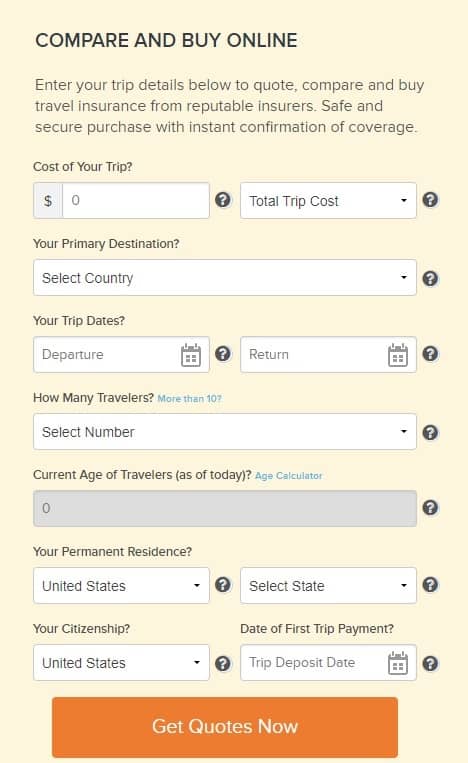
Skip The Shopping
Compare All Travel Insurance Here
Cruise Line Insurance vs Third-party Insurance
This is where many travelers get stuck. The cruise line offers insurance at checkout, and it feels easy to click “yes” and move on. Sometimes that convenience is enough. Often, though, third-party insurance gives you stronger protection and more flexibility.
Cruise line plans can be decent for basic trip protection, but they may lean heavily toward cruise credit instead of full cash reimbursement in certain situations. They also may focus mainly on the cruise fare, while your trip might include flights, pre-cruise hotels, and independent excursions booked elsewhere.
A third-party policy may be a better fit if you booked the trip yourself, used points for flights, added several nonrefundable components, or want higher medical and evacuation limits. It also gives you the chance to compare benefits rather than taking the first option shown at checkout.
That said, third-party is not automatically better. Some travelers value simplicity and only need modest protection. If the cruise line plan covers your biggest risks at a fair price, it may be enough. The key is not buying on autopilot.

What Travelers Often Get Wrong
The most common mistake is assuming all cancellation reasons are covered. They are not. If you want the flexibility to cancel because you simply changed your mind, got nervous about the weather, or had a work issue not listed in the policy, standard coverage probably will not help. That is where cancel-for-any-reason coverage can come into play, though it costs more and usually reimburses only part of the trip cost.
Another mistake is underinsuring the trip value. If you only insure the cruise fare and skip the flights, hotels, and excursions, you could still lose a significant chunk of money. On the other hand, some travelers insure refundable expenses they do not need to insure.
Medical limits are another area where people go too light. A cheap policy can look fine until you notice it offers very limited medical coverage or weak evacuation benefits. For cruise travel, especially international itineraries, that is not the place to cut corners.
Timing matters too. Some benefits are only available if you buy insurance soon after making your initial trip deposit. If you wait until the last minute, you may miss access to more comprehensive options.
How To Choose The Right Policy For Your Trip
Start with the total amount of money you would actually lose if you had to cancel. That includes every prepaid, nonrefundable expense, not just the cabin. Then think about your route. A Caribbean cruise from Florida is one thing. An Alaska cruise with flights, wilderness excursions, and weather variables is another. A Mediterranean sailing with multiple moving parts is another level again.
Next, review medical and evacuation coverage. For many cruise travelers, this is the piece worth paying for. If you are visiting remote areas or spending many days at sea, stronger limits make sense.
Then review delay and missed connection benefits. If you are flying to your departure port, especially in winter or during hurricane season, these can be extremely valuable. If you are driving a couple of hours to port and boarding the same day, your needs may be different, though I would still argue that arriving the day before is one of the smartest cruise habits you can adopt.
Finally, read the exclusions. Adventure excursions, pre-existing medical conditions, named storms, and supplier financial default can all be handled differently from one policy to another. A policy is only as good as the situations it actually covers.
When Travel Insurance For Cruises Is Especially Worth It
If your cruise is expensive, international, heavily prepaid, or difficult to replace, travel insurance for cruises usually makes good sense. The same goes if you are traveling during storm season, flying a long distance to the port, cruising with older family members, or booking an itinerary with expensive private tours.
It is also worth a hard look if you cannot easily absorb a surprise bill. That is the practical test. If losing the trip cost or paying for a medical emergency would derail your finances, travel insurance for cruises is less of a luxury and more of a smart guardrail.
There are cases in which travelers may choose to self-insure rather than purchase travel insurance for cruises. Maybe it is a short, low-cost cruise, you are driving to port, and you could comfortably afford the loss. That can be a reasonable call. But it should be a conscious decision, not one based on the idea that cruises are somehow simpler than land trips. In many ways, they are not.
A Smarter Way To Think About Travel Insurance For Cruises
The best policy is not the one with the flashiest sales pitch. It is the one that matches how you actually travel. Independent travelers tend to stitch trips together with flights, hotel nights, points bookings, and do-it-yourself excursions, which means generic cruise coverage can leave gaps.
That is why I always come back to value over price. Cheap insurance that fails when you need it is not a deal. Solid coverage that protects a major trip investment often is. For readers of Brit On The Move, that is the sweet spot – spending carefully, not blindly, so one bad travel day does not wipe out the savings you worked hard to build.
Before purchasing travel insurance for cruises, slow down and check what is covered, what is excluded, and what would actually hurt if things went sideways. A cruise should feel exciting, not financially fragile.
Looking For More?
- 11 Best Budget Cruises for Adults
- 20 Ways To Save Money On Your First Cruise
- 6 Practical Reasons To Choose An Inside Cruise Cabin
- 7 Best Ways To See Behind The Scenes On A Cruise Ship
- 75 Plus Free Activities On The Oasis Of The Seas – Amplified
- Atlas Ocean Voyages: A Guide to Luxury Expedition Cruises
- A Realistic Solo Cruise on a Budget Plan
- All Access Ship Tour – Behind The Scenes Of A Cruise Ship
- CocoCay – The Perfect Day On Royal Caribbean’s Private Island
- Oasis of The Seas – The Amplified Version
- Vacation On A Cruise & Why It’s For Everyone!
Brit On The Move™ Travel Resources
Ready to book your next trip? Use these resources that work:
Was the flight canceled or delayed? Find out if you are eligible for compensation with AirHelp.
- Hotels: Find the best prices; use Booking.com
- Apartment Rentals: Find the best prices on apartment rentals with Booking.com’s Apartment Finder.
- Travel Insurance: Don’t leave home without it. View our suggestions to help you decide which travel insurance is for you: Travel Insurance Guide.
- Credit Cards: Check out our recommendations for Travel Credit Cards.
- Volunteer Vacation or a Working Holiday? Check out the complete guide here!
- Rental Cars: Find the best deals here!