How to Choose Travel Insurance Plans for Complete Peace of Mind
You usually don’t think about travel insurance plans when everything is going right. You think about them when an airline loses your bag before a cruise, when a stomach bug ruins a trekking itinerary, or when a weather delay turns one missed connection into a very expensive mess. That’s why choosing a policy deserves more than a quick checkout add-on and a hopeful shrug.
For budget-conscious travelers, insurance can feel like one more cost piled onto flights, hotels, tours, and airport snacks. Sometimes it is worth every dollar. Sometimes it overlaps with protections you already have through a credit card or existing medical coverage. The trick is knowing what you’re actually buying, what you already have, and where the real gaps are.

This post may contain affiliate links. Please read our disclosure and privacy policy for more information.
What Travel Insurance Plans Actually Cover
Most people hear “travel insurance” and assume it means everything that can go wrong on a trip. It doesn’t. Policies are usually a bundle of specific protections, each with its own limits, exclusions, and rules.
Trip cancellation coverage helps if you need to cancel before departure for a covered reason, such as a serious illness, injury, certain family emergencies, or severe weather. Trip interruption coverage is the mid-trip version. If you have to head home early or your trip is disrupted for a covered reason, this benefit may reimburse unused prepaid costs and, in some cases, extra transportation.
Travel medical coverage is a separate piece, and for many international trips, it’s the one that matters most. Your regular US health insurance may provide little to no coverage abroad. Even if it does, it may not handle medical evacuation, which can get brutally expensive fast. A helicopter ride off a mountain, or an air ambulance between countries, is not the kind of surprise charge most travelers can absorb.
Baggage protection usually covers lost, stolen, or damaged luggage, but the payout caps can be lower than people expect. Delay benefits may reimburse for essentials if your bags arrive a day or two late. Travel delay coverage can help cover meals, hotels, and local transport if you’re stuck overnight due to a covered disruption.
Then there’s accidental death and dismemberment coverage, which sounds grim because it is. It exists, but for most travelers, medical and evacuation benefits deserve far more attention.
The Biggest Mistake People Make With Travel Insurance Plans
They buy based on price alone.
Cheap policies can look similar on the surface, especially if you’re only glancing at headline numbers. But two plans with the same basic price can handle a claim very differently. One may include solid emergency medical benefits but weak cancellation rules. Another may offer baggage protection that sounds generous until you notice the per-item cap is tiny.
The other common mistake is assuming a premium travel credit card replaces a full policy. Sometimes card benefits are genuinely useful. They may cover trip delays, baggage issues, rental car damage, or some cancellation scenarios if you paid with the card. But medical coverage abroad is often limited or nonexistent, and evacuation coverage may not be strong enough for riskier trips. If you’re heading to a remote area, taking a cruise, skiing, hiking, or doing anything where logistics can go sideways fast, card perks alone may not be enough.
How To Compare Travel Insurance Plans Without Getting Lost
Start with the trip itself. A long domestic weekend has a different risk profile than a two-week international itinerary with nonrefundable tours and multiple flights. If you’re road-tripping three states over and staying in refundable motels, you may care less about cancellation benefits and more about roadside realities and medical coverage. If you’re sailing on a cruise, missed connection and medical evacuation coverage become a much bigger deal.
Next, look at your prepaid, nonrefundable costs. That number helps you decide how much cancellation and interruption coverage you actually need. Don’t insure imaginary losses. If your flight was booked with points and your hotel can be canceled up to 48 hours before arrival, your real exposure may be much lower than the total retail value of the trip.
Then check your existing protections. Review your health insurance for out-of-country coverage. Review your credit card travel benefits. If you already have decent trip delay and baggage delay protection through a card, you may want a policy that mainly fills the medical and evacuation gap.
After that, read the definitions. This is the unglamorous part, but it matters. “Covered reason” is the phrase that controls most claims. A policy may reimburse cancellation due to illness, but not because you simply changed your mind, got nervous about unrest, or decided the weather forecast looked disappointing. If flexibility matters more than the lowest premium, a cancel-for-any-reason upgrade may be worth considering, though it usually costs more and only reimburses a percentage of your trip.
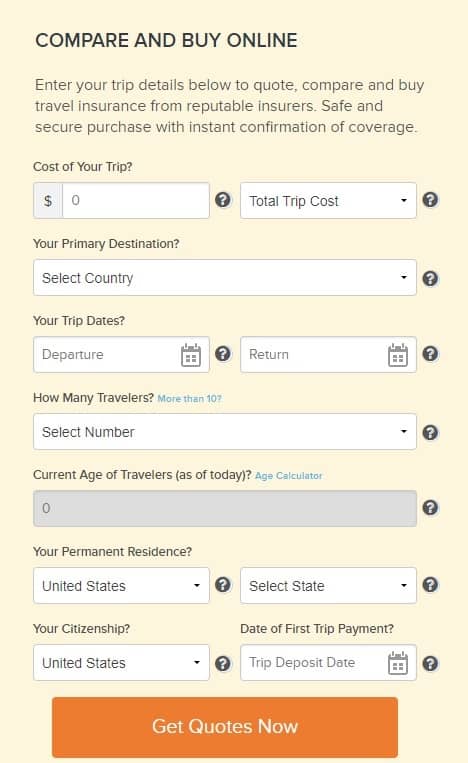
Skip The Shopping
Compare All Travel Insurance Here
When The Cheapest Plan Is Enough
Sometimes simple is fine.
If you’re taking a low-cost domestic trip, have flexible bookings, strong card protections, and a good financial cushion for minor disruptions, a bare-bones policy may be all you need – or you may decide to skip one altogether. Not every trip requires maximum coverage.
The same goes for travelers who can comfortably absorb smaller losses. If replacing a delayed bag, booking an extra airport hotel, or rebooking a short flight wouldn’t wreck your budget, you can focus on catastrophic protections rather than insuring every inconvenience.
That said, don’t confuse “I’m trying to save money” with “I can afford a medical emergency abroad.” Those are very different things.

When Stronger Coverage Is Worth The Extra Cost
International trips are the obvious case, especially if you’re visiting places where your regular insurance won’t help much. Adventure travel is another. If your idea of a vacation includes scuba, skiing, snowmobiling, trekking at altitude, zip lining, or renting vehicles in places with chaotic roads, read the activity exclusions carefully. Plenty of policies advertise adventure coverage, only to carve out half the things active travelers actually do.
Cruises also deserve extra scrutiny. Medical care onboard can be expensive, and emergency evacuation from a ship or foreign port is not a small claim. If you’re flying to the departure city, missed connection protection matters too. A delayed inbound flight can become a full ship-missed nightmare.
Travelers with health conditions should be especially careful. Some plans exclude pre-existing conditions unless you buy coverage within a specific time window after making your first trip deposit. Miss that deadline, and your cheaper policy may turn into an expensive false sense of security.
What To Read Before You Buy
You don’t need to read every line like you’re preparing for the bar exam, but you do need to check a few essentials.
Look at medical limits, evacuation limits, cancellation rules, delay thresholds, baggage caps, and exclusions for sports or risky activities. Check whether the insurer offers primary or secondary medical coverage. Primary coverage generally pays first, which can make claims less annoying. Secondary coverage may require you to file elsewhere first.
Also, check how claims are documented. If reimbursement depends on receipts, physician statements, airline notices, police reports, and timestamps, you need to be the kind of traveler who keeps records. If you’re not naturally organized, create a simple trip folder on your phone before departure and dump all booking confirmations and receipts into it.
One more thing – buy early if you want the widest range of options. Some time-sensitive benefits, especially waivers related to pre-existing conditions or cancel-for-any-reason add-ons, are only available shortly after your initial trip payment.
A Practical Way To Decide
Ask yourself three questions.
First, what losses would seriously hurt my budget? Second, what protections do I already have? Third, what are the weak points in this specific trip?
For one traveler, the answer is a medical-focused plan for an overseas hiking trip. For another, it’s broader cancellation coverage for a pricey cruise with multiple prepaid components. For someone else, it’s no policy at all because the trip is cheap, flexible, and easy to self-insure.
That’s the honest answer nobody loves because it isn’t neat. The best travel insurance plans aren’t the same for everyone. They’re the ones that match your actual risks, not the scary marketing copy or the cheapest box you can click.
At Brit On The Move, that’s usually the lens worth using for any travel expense: spend where the downside is real, skip what you don’t need, and make sure your savings strategy doesn’t leave you exposed in the one moment it actually counts.
Looking For More?
- 11 Smart Ways to Save Money on Flights
- 9 Best Travel Loyalty Programs Worth Using
- Are Travel Deal Alerts Worth It
- Europe Rail Pass Comparison: Which One Wins?
- Hotel Points vs Airline Miles: Which Wins?
- How To Find Cheap International Flights
- What Are Mistake Fares and Are They Worth It?
Brit On The Move™ Travel Resources
Ready to book your next trip? Use these resources that work:
Was the flight canceled or delayed? Find out if you are eligible for compensation with AirHelp.
- Hotels: Find the best prices; use Booking.com
- Apartment Rentals: Find the best prices on apartment rentals with Booking.com’s Apartment Finder.
- Travel Insurance: Don’t leave home without it. View our suggestions to help you decide which travel insurance is for you: Travel Insurance Guide.
- Credit Cards: Check out our recommendations for Travel Credit Cards.
- Volunteer Vacation or a Working Holiday? Check out the complete guide here!
- Rental Cars: Find the best deals here!