Kylemore Abbey: Discover the Majestic Beauty of Ireland’s Timeless Treasure
I first saw Kylemore Abbey on a wet Tuesday in October, the kind of Connemara weather that turns the mountains a deep, mossy green and sends cloud shadows chasing across Pollacapall Lough. The castle sat there on the far shore, all grey stone and turrets, doubled perfectly in the still water. It’s one of those views that gets photographed constantly and somehow still catches you off guard in person.

This post may contain affiliate links. Please read our disclosure and privacy policy for more information.
Kylemore Abbey sits in Connemara, County Galway, right on the Wild Atlantic Way, and it draws visitors for two reasons that don’t always get separated clearly enough. There’s the building itself, a Victorian castle turned Benedictine monastery with a genuinely difficult history behind its postcard looks. And there’s the estate around it, a working Victorian walled garden, woodland trails, and lakeshore paths that reward a slow walk rather than a quick photo stop.
The History of Kylemore Abbey: From Victorian Home to Living Monastery
Kylemore’s story moves through three distinct chapters: a Victorian family home built out of grief and ambition, a monastery founded by Benedictine nuns fleeing wartime Belgium, and a boarding school that eventually closed to make way for the monastic community’s current life. Each chapter shaped the buildings and grounds visitors walk through today.
Origins and Construction
Mitchell Henry commissioned Kylemore Castle after buying the land in 1862; he completed the house in 1868. The design blends Victorian Gothic styles with decorative stonework sourced locally from Connemara.
Mitchell and Margaret Henry’s Story
Mitchell Henry, a wealthy English politician and businessman, built Kylemore Castle in the 1860s as a home for his wife Margaret, completing the project in around five years. Henry built the estate initially as a private family home and incorporated formal gardens, woodlands, and a private chapel.
You can still see the layout reflecting 19th‑century country-house priorities: a lakeside façade, axial approach, and walled kitchen garden. Margaret died in 1874 during a trip to Egypt, and Mitchell had the neo-Gothic church built on the estate as a memorial to her, modeled loosely on Norwich Cathedral in miniature.

Regional stone masons and artisans built the house, and its scale—over 1,000 acres—made it a landmark in west Galway. Margaret’s death in 1874 transformed the household and later influenced the property’s fortunes.
The Duke and Duchess of Manchester later bought the estate, though their ownership was comparatively brief before it passed into the hands that would define its next century.
Gothic Church – Neo-Gothic Church
You approach the little neo‑Gothic church and see its compact, chapel‑like proportions and refined stone detailing. Built in the late 1870s, the church features pointed arches, slender buttresses, and decorative tracery that echo the main house but on a smaller, more intimate scale.
Inside, delicate polychrome stonework and stained glass punctuate the sanctuary. The church’s scale and ornamentation were designed to read as a private devotional space for the estate rather than a parish church, so your attention goes to fine carving, memorials, and the careful use of coloured light.


Benedictine Community
In 1920, nuns from the Belgian Benedictine order established a convent at Kylemore. You will note that they converted the former private residence into a functioning monastery and school.
The community ran a girls’ boarding school for much of the 20th century, drawing students from Ireland and abroad. They maintained the estate, restored the Victorian walled garden, and gradually opened parts of the grounds to visitors.
How the Benedictine Nuns Came From Ypres
The Benedictine nuns who founded the monastery at Kylemore in 1920 trace their community’s roots to Brussels in 1598, with later generations settling in Ypres, Belgium. World War I destroyed their monastery in Ypres, forcing the community, known historically as the Irish Dames of Ypres, to seek a new home. They found it at Kylemore Castle, converting the Henrys’ family home into a Benedictine monastery within the English Benedictine Congregation.
The Former Boarding School and Monastic Life Today
The nuns opened a boarding school for girls not long after settling at Kylemore, and it operated for decades, drawing students including from as far as international noble and diplomatic families, before closing in 2010.
Today the Benedictine community continues its life of prayer and hospitality on the estate, with ties including academic connections to institutions such as the University of Notre Dame. The monastery remains an active, private religious community, distinct from the visitor areas open to the public.

The Benedictines adapted historic rooms for chapel use and set up religious, educational, and craft activities that sustained the site. Their presence anchored Kylemore’s identity as both a spiritual center and a public heritage attraction.
Role During Irish History
Kylemore’s timeline intersects with major national events, though it never served as a political headquarters. The abbey’s foundation came during the Irish War of Independence era, and the convent’s continuity through the 20th century reflected wider social changes in Ireland.
The estate also mirrors shifts in landownership and tourism. As large private houses became less sustainable, many such properties found new uses; Kylemore’s conversion to a monastery and later development as a visitor destination follow that pattern.
Estate records, conservation projects, and the opening of the gardens to the public provide evidence of these transitions. The site now functions as a cultural resource that connects local heritage, religion, and regional tourism.
Architectural Features
Kylemore Abbey combines castle-like massing, detailed stone carving, and tightly ordered garden geometry to create a cohesive 19th-century estate. Expect volcanic sandstone façades, neo‑Gothic ornament, a small ornate church, and a restored Victorian walled garden set directly beside a lake and woodland walks.

Victorian Gothic Design
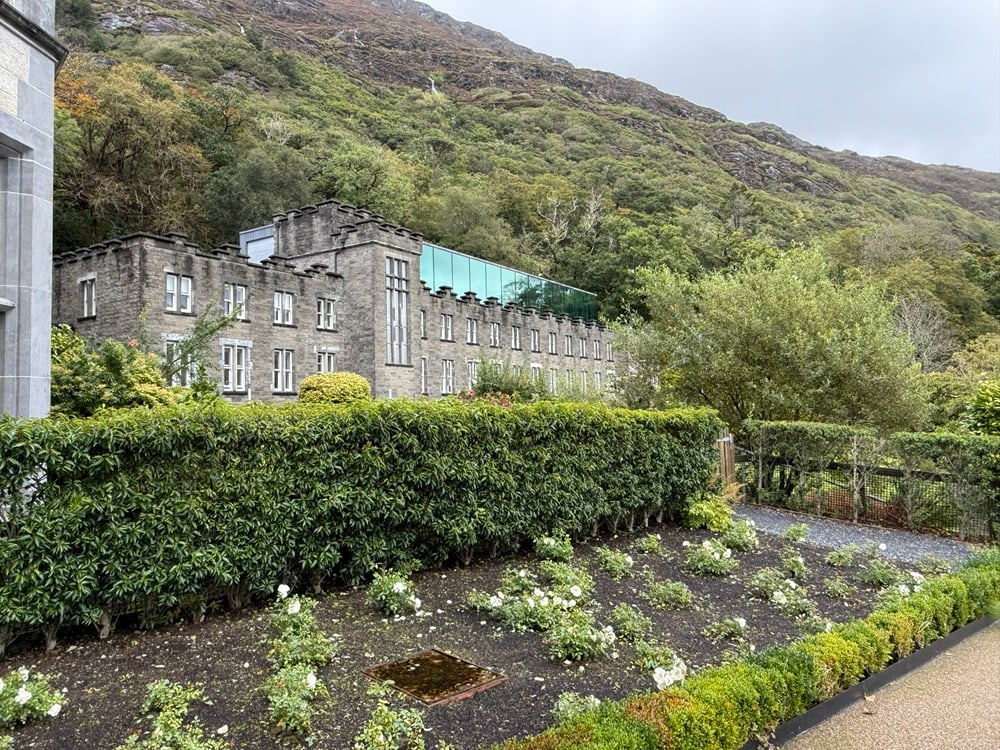
You will notice the building’s neo‑Gothic vocabulary immediately: steeply pitched roofs, crenelated parapets, and tall chimneys give the house a fortified silhouette. The main structure uses warm sandstone with ashlar dressings; carved window and door surrounds show the handwork of 19th‑century masons.
Look for Gothic details that favor natural motifs over grotesques — carved flowers, birds, and angels replace gargoyles in many places. Internally, ornate staircases, carved newel posts, and stained‑glass windows provide visual focal points and reveal the original private‑house plan and craftsmanship.

Touring Kylemore Abbey
The Kylemore estate splits into four distinct areas: the restored rooms inside Kylemore Castle, the neo-Gothic church and mausoleum, the Victorian Walled Garden, and the woodland and lakeshore trails threading around Pollacapall Lough. Each rewards a different pace, from a focused twenty-minute room tour to an unhurried hour among the flower beds.
1. The Restored Rooms at Kylemore Castle
Visitors enter under a granite arch into the Welcome Room, once the castle’s kitchen scullery, where a timeline introduces the Kylemore story before you move further inside. From there, a handful of restored rooms showcase the world Mitchell and Margaret Henry built: refined Victorian interiors with period furniture and art. Only a portion of the castle’s original 70-plus rooms are open to the public, since much of the building remains a working monastery and school archive rather than a museum.
If you plan to tour Kylemore Castle, know that it takes about an hour to see everything on display.


2. The Neo-Gothic Church and Mausoleum
The neo-Gothic church, sometimes called the mini-Gothic church for its compact scale, sits a short walk from the main castle building along the lakeshore path. Mitchell Henry built it as a memorial to Margaret after her death, and its intricate stonework and stained glass feel disproportionately grand for such a small structure. The mausoleum nearby holds the remains of both Mitchell and Margaret Henry, a quieter, more solemn stop than the church itself.

3. The Victorian Walled Garden
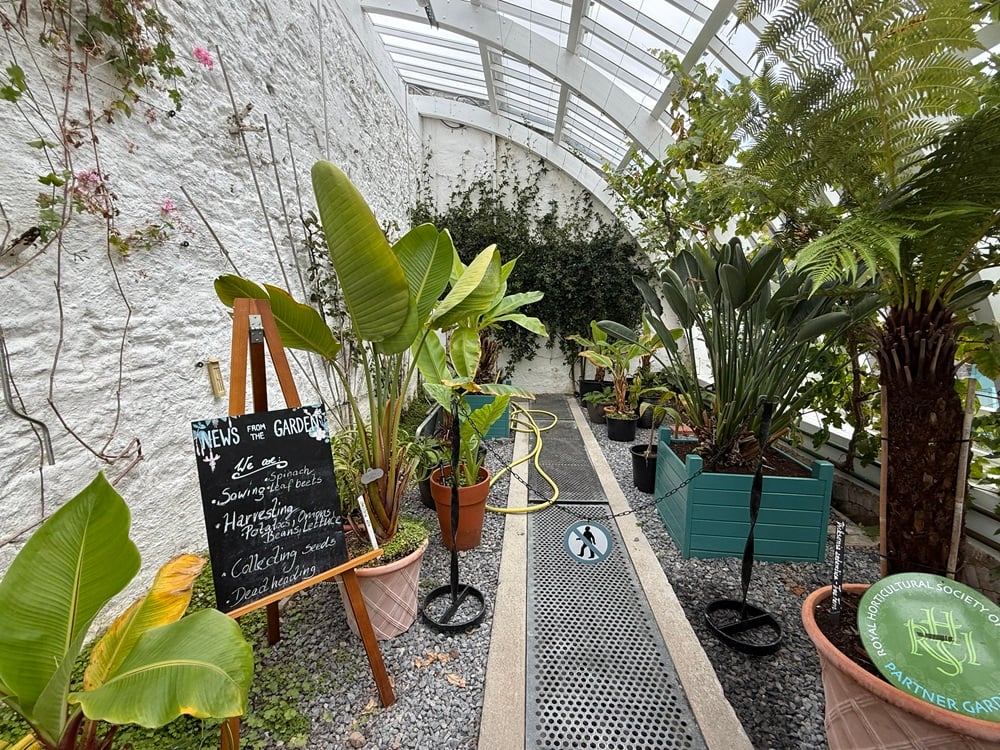
The Victorian Walled Garden sits about a kilometer from the castle, connected by a shuttle bus that runs regularly through the visitor season, or a pleasant walk if you’d rather stretch your legs. Designed by head gardener James Garnier in the 1860s, the garden splits into a flower garden and a kitchen garden, both restored to reflect their Victorian working origins. Glasshouses, herbaceous borders, and a walled kitchen garden growing vegetables and fruit trees make this one of the most complete restored Victorian gardens in Ireland.
As much as seeing the inside of Kylemore Castle is an interesting must, the Victorian Walled Garden was the main attraction for me. I’ve been to hundreds of castles, palaces and stately homes all over the world. None compare to the Victorian Walled Garden at Kylemore Abbey. This garden has an Irish charm. It is immaculately maintained, bright and vibrant, but it still has some very old greenhouses and other structures that date back to 1862. It’s an interesting contrast: old buildings brought to life with new plants and flowers.
You could spend an hour or so in the formal gardens, but plan on a couple of hours and pray for good weather.



4. Woodland and Lakeshore Walks
Trails wind along the shore of Pollacapall Lough and through the surrounding woodland, offering the best unobstructed views of the castle reflected in the water. These paths are mostly flat and manageable, though sections near the lake can be uneven after rain.

Kylemore sits on the edge of Pollacapall Lough, and the abbey’s lakeshore provides immediate water views and reflections of the building. You can walk along established lakeside paths to photograph the abbey from the water or to find quieter spots for birdwatching.
The estate’s mixed woodland contains native and planted species that support songbirds and small mammals. Well-maintained paths through the trees link the gardens to the lake, giving you a sheltered route on wet or windy days.
Allow thirty to forty-five minutes for a full lakeshore loop if you want to walk it without rushing.
Guided Tours Of Kylemore Abbey
Guided tours run at scheduled times and cover the Abbey’s main reception rooms, family bedrooms, and the Benedictine community’s story. Tours typically last 45–60 minutes and include anecdotes about the castle’s construction, the Mitchell Henry family, and later monastic life, giving context to the interiors you see.
Booking in advance is recommended for guided tours during peak season; you can buy tickets online or at the ticket desk. Guides point out architectural details, period furnishings, and conservation efforts, and they can answer questions about photography rules and which rooms are off-limits.

Several operators run day tours from Galway City that combine Kylemore Abbey with Connemara National Park, Clifden, and the Sky Road, often as a nine-hour outing with a driver-guide. These suit visitors who’d rather not navigate Connemara’s narrow roads themselves, and they typically build in enough time at Kylemore for the abbey rooms, church, and garden.
On-site Cafés
The main café at Kylemore Abbey serves soups, sandwiches, and daily specials made on-site. You can get coffee, pastries, and locally made cakes; seating includes indoor tables and outdoor benches with lake or garden views.
Service is steady during peak hours, so plan for short waits at midday. The café is family-friendly and offers takeaway if you prefer to picnic in the Victorian Walled Garden or on the estate grounds.
Menus highlight Irish ingredients like grass-fed beef, seasonal vegetables, and freshly baked brown bread. The abbey and nearby producers prioritize local sourcing, so expect treats such as farmhouse cheeses, scones, and preserves from Connemara suppliers.

Things to Do Near Kylemore Abbey
Connemara National Park in nearby Letterfrack offers hiking trails through bog and mountain terrain. Clifden, Connemara’s largest town, has the scenic Sky Road loop just outside it. Cong, the village associated with the film “The Quiet Man,” makes a worthwhile detour for visitors continuing toward County Mayo.
Making Kylemore Abbey the Highlight of a Connemara Day
Kylemore Abbey works best as the anchor of a Connemara day, not a rushed stop between other sights. Building your day around it, with time before or after for Clifden, the Sky Road, or Connemara National Park, lets you actually enjoy the walled garden and lakeshore paths instead of racing the clock.
The tea house and on-site dining make it easy to linger over lunch with a lake view, and the estate’s pace naturally slows visitors once they’re through the gate. Pairing the abbey with one nearby stop, rather than three or four, keeps the day on the Wild Atlantic Way relaxed instead of rushed.
Frequently Asked Questions
Are there still nuns at Kylemore Abbey?
Yes, a community of Benedictine nuns continues to live at Kylemore Abbey as an active monastery. Their presence dates back to 1920, when the community arrived after being displaced from Ypres, Belgium, during World War I.
How much do Kylemore Abbey tickets cost?
Ticket prices change periodically, so check the official Kylemore Abbey website for current rates before you travel. Admission covers the abbey rooms, church, mausoleum, Victorian Walled Garden, and walking trails.
Can you visit Kylemore Abbey from Galway in one day?
Yes, Kylemore Abbey is a comfortable day trip from Galway City, roughly ninety minutes away by car via the N59. Many visitors combine the trip with Connemara National Park or Clifden for a fuller day out.
What is the difference between Kylemore Castle and Kylemore Abbey?
Kylemore Castle refers to the original Victorian building Mitchell Henry built in the 1860s as a family home. Kylemore Abbey describes the site’s later identity as a Benedictine monastery, established in 1920 when the nuns took over the castle and grounds.
Is the Victorian Walled Garden included with admission?
Yes, the Victorian Walled Garden is included with the standard Kylemore Abbey ticket, along with the castle rooms, church, and trails. A shuttle bus typically connects the garden to the main estate for visitors who prefer not to walk the distance.
Who owns Kylemore Abbey today?
The Kylemore Trust, a non-profit organization led by the Benedictine nuns who live there, owns Kylemore Abbey. The trust oversees both the working monastery and the visitor attraction on the estate’s 1,000 acres.
Closing Thoughts
Step onto the lakeshore and you’ll find Kylemore Abbey delivers a compact, layered experience: a Victorian castle-turned-Benedictine monastery, restored walled gardens, a neo-Gothic church, and miles of Connemara scenery all within one visit. If you want a single stop that combines striking architecture, quiet spiritual spaces, hands-on history, and scenic walks, Kylemore Abbey offers it all on one accessible estate.
Looking For More?
- 50 Plus Things to Do in Belfast
- The Belfast Peace Walls
- The 10 Most Famous UNESCO World Heritage Sites
- Stonehenge – How To Visit For Free – With Maps!
- Temple Newsam – Leeds, England
- UNESCO World Heritage Sites – What Are They?
- Why Visit Lotherton Hall?
- York – The Heart Of The Viking Territory
Brit On The Move™ Travel Resources
Ready to book your next trip? Use these resources that work:
Was the flight canceled or delayed? Find out if you are eligible for compensation with AirHelp.
- Hotels: Find the best prices; use Booking.com
- Apartment Rentals: Find the best prices on apartment rentals with Booking.com’s Apartment Finder.
- Travel Insurance: Don’t leave home without it. View our suggestions to help you decide which travel insurance is for you: Travel Insurance Guide.
- Credit Cards: Check out our recommendations for Travel Credit Cards.
- Volunteer Vacation or a Working Holiday? Check out the complete guide here!
- Rental Cars: Find the best deals here!