
Crawford Priory – An Amazing Hidden Treat in Scotland
Few who explore Scotland will make it to Crawford Priory. Most people do not realize that this majestic structure sits in decay, hidden from view. Yet, while it sits in disrepair, it still dominates the landscape with its beauty. Crawford Priory is a forbidden treat for anyone who enjoys history, architecture, or urban exploration.

This post may contain affiliate links. Please read our disclosure and privacy policy for more information.
Crawford Lodge Or Crawford Priory
Scottish priories are dotted all across Scotland. Priories are a form of monastic or religious houses. Much as the name Crawford Priory implies, Crawford Priory is not and was not a Scottish priory.
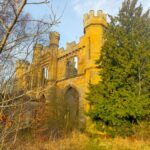
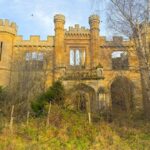
Crawford Priory is called a priory because it resembles a Gothic priory from the east. The building’s features include octagonal turrets, large windows, and arches. Crawford Priory was originally called Crawford Lodge. Lady Mary Lindsay Crawford renamed it Crawford Priory in the early 19th century. Features include octagonal turrets, large windows, and arches. People claim to have seen Lady Crawford’s ghostly presence, which further intrigues locals and tourists alike.

The Beginning of Crawford Lodge
Crawford Priory was built by the 21st Earl of Crawford, who initiated its construction in 1758 as Crawford Lodge. It served as a country residence for the Earl’s family.
In the early 19th century, Lady Mary Lindsay Crawford became integral to the estate’s transformation. She commissioned extensive renovations in 1809 to transform the building into an impressive baronial mansion. Lady Mary Lindsay Crawford’s influence shaped the Gothic design in the 19th century.

The architects David Hamilton and, later, James Gillespie Graham contributed significantly to its architectural style during this period of restoration. Their work helped establish Crawford Priory as a notable structure within Fife. In addition, Priory figures such as architects Kirkcaldy and Rodolph Fielding were involved during renovations in the early 1870s, highlighting ongoing patronage and care in its upkeep.
The estate was designed to reflect the grandeur of the time, showcasing intricate architectural details typical of Gothic revival styles. Although it has since fallen into disrepair, the building’s origins highlight the prominence of the Earl’s lineage and their contribution to the area’s history.
Religious Importance
Despite its name, Crawford Priory had no actual religious function. It was never a priory in the traditional sense; instead, it stands as a testament to the architectural aspirations of its owners. The structure’s design does evoke a sense of medieval ecclesiastical influence, contributing to its historical allure.
Crawford Priory Gothic Architecture Characteristics
Crawford Priory’s architectural style is predominantly Gothic, notable for its intricate detailing and dramatic forms. Its grandeur is enhanced by features such as pointed arches, ribbed vaults, and elaborate stone carvings.
The building has various windows, including those with tracery, that let natural light into the interior, enhancing its visual impact. Its facade’s use of asymmetry creates a sense of movement and interest.

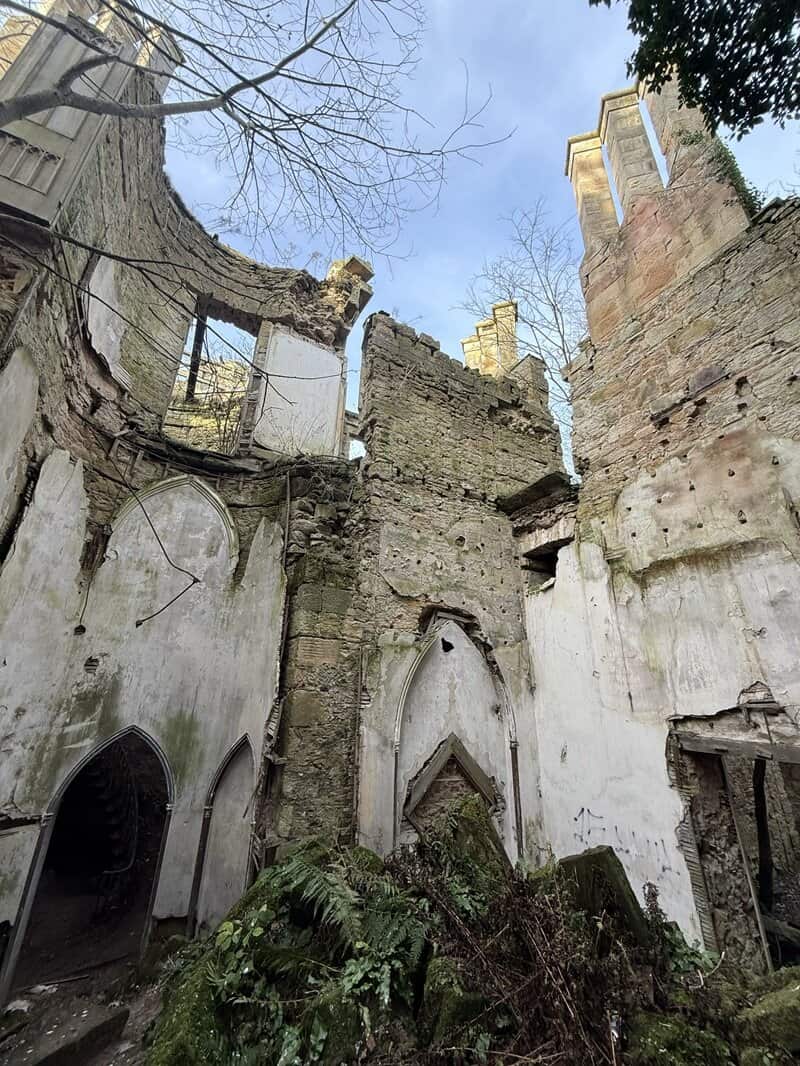
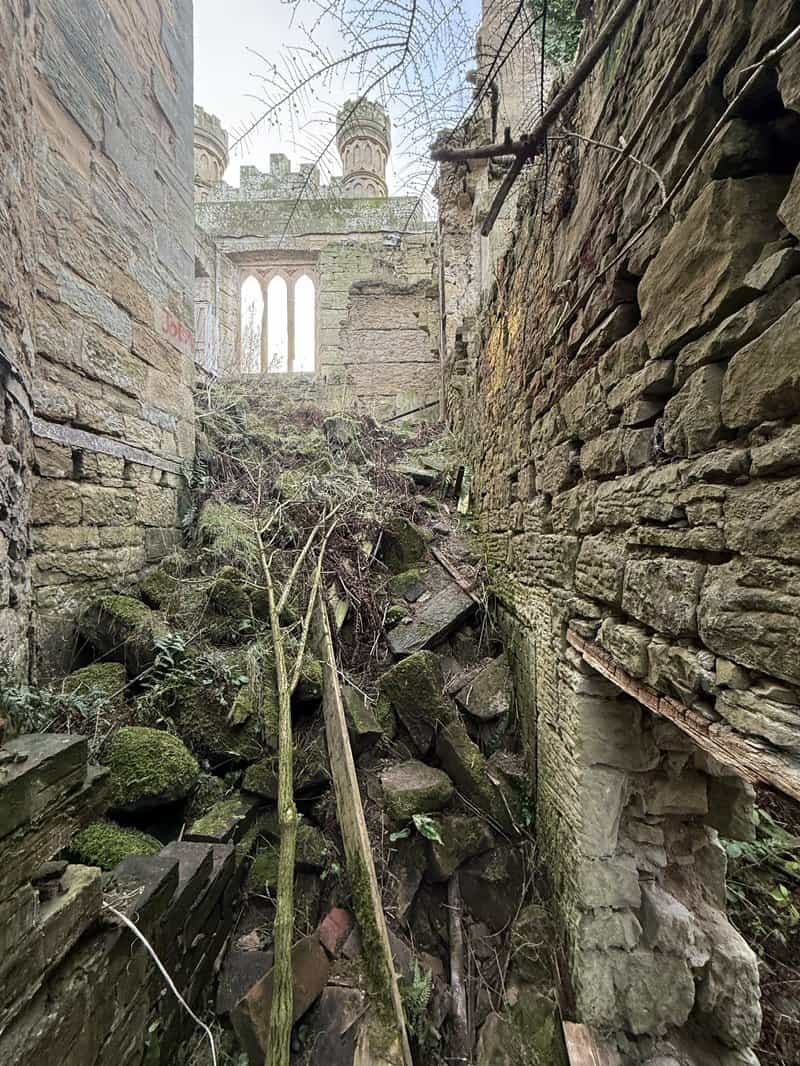
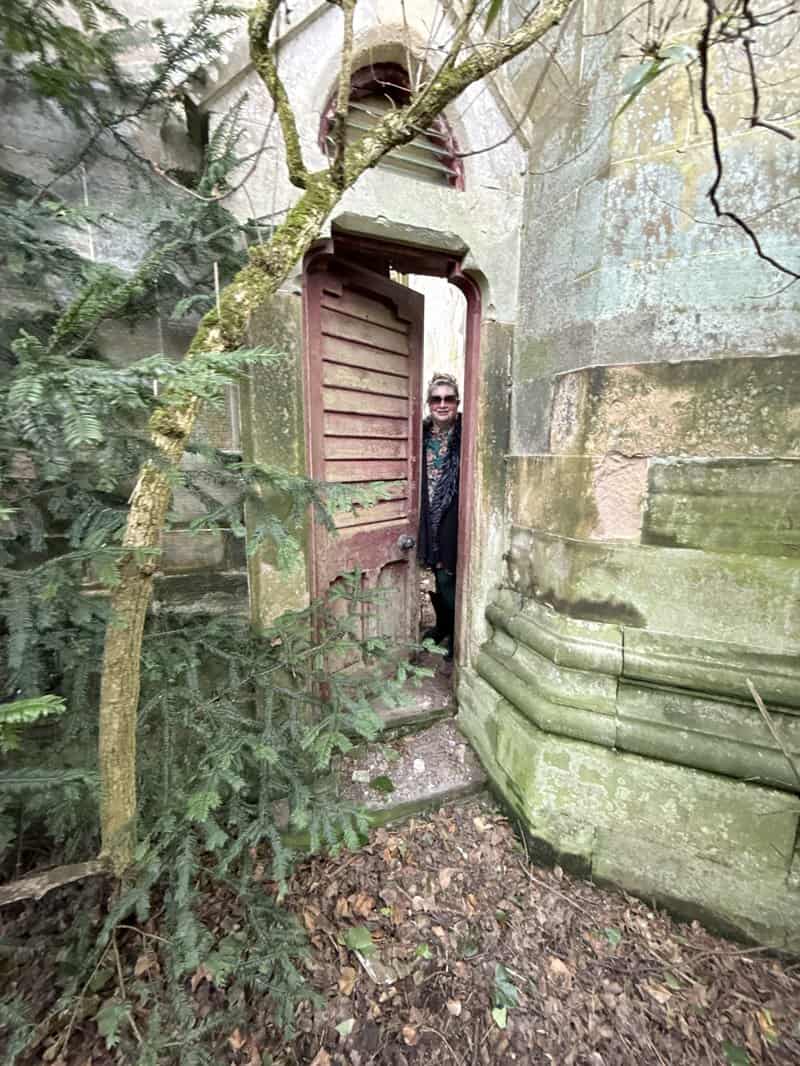
It is also significant that the structure was constructed with local stone, which adds to its authenticity and connection to the surrounding landscape. This mixture of functionality and artistry makes Crawford Priory a remarkable example of 19th-century Gothic revival.
While exploring what still remains, you can not help but be in awe of the staircase and the tile in the foyer. It’s a master piece to say the least. Anyone with an imagination will be pondering how grand and opulent this was in its prime. Naturally, climbing this staircase is risky (and definitely trespassing), but it reaches the top, offering you a view of the entire estate.


Crawford Priory has historically played a significant role in the local economy and education. Its connection to local heritage and community initiatives underscores its importance in Cupar and beyond. Before its current state, events held at the site drew crowds that positively affected neighboring economies.
Conservation Efforts For Crawford Priory
Crawford Priory isn’t being restored mainly because of practical, financial, and ownership issues, as well as the extent of its deterioration over the decades. Here’s a clear summary of the key reasons why restoration hasn’t happened.
It’s structurally ruined and very expensive
The priory was abandoned in 1968 because it was already too costly to maintain as a large historic house. Since then, it has continued to deteriorate. A fire in 1995 gutted the interior, leaving only a roofless shell with unstable masonry.
You can see the electrical panels exposed due to the fire, along with the lack of a roof:

Restoring that kind of ruin — especially a roof, structural stabilization, and conservation — would cost far more than minor repairs, likely running into millions of pounds. Historic building restoration often also requires specialist craftsmen and materials, which add to cost and complexity.
No viable funding or buyer emerged
When the owners were required to market the property in the late 1990s (as part of an agreement with heritage authorities), no serious offers were received. Because there hasn’t been sufficient interest from developers or heritage trusts willing to invest large sums, there hasn’t been a realistic restoration plan.
Ownership and planning barriers
The priory is still privately owned by the Barons Cochrane of Cults via Crawford Priory Ltd, who have at various points sought to demolish it and have been unwilling to sell to interested third parties. Local conservation bodies and planners have blocked demolition and want to preserve what remains, but this has mostly kept the building as a neglected ruin rather than advancing restoration.
It’s a listed building, but in such poor condition
Crawford Priory is a Category B listed status (even if its architectural importance might merit higher) — meaning protections apply, but that doesn’t automatically provide funding for restoration. A listed building in the United Kingdom is a structure that has been placed on the official statutory list because of its special architectural or historic interest. Once listed, it is legally protected.
When a building is “listed,” it cannot be:
- Demolished
- Extended
- Altered in a way that affects its character
Without Listed Building Consent from the local planning authority.
Historic Environment Scotland and other heritage groups have noted it’s at high risk, but listing alone doesn’t bring the millions needed to actually restore large parts of the structure. So today it remains a roofless ruin on the Buildings at Risk Register, rather than a functioning restored heritage site.

Visiting Crawford Priory
Before we even discuss visiting, there are a few things you need to know:
- It’s private propery and there are signs all over telling you this – aka it’s actually illegal to go inside. So, if you choose to be aware that you assume this risk.
- It’s a ruin and potentially very dangerous. If you choose to enter, it’s at your own risk.
As you approach the site, you’ll see that some older buildings and stables have been converted. People do live in the old buildings near the stables — likely in converted former estate buildings or gatehouse–style cottages associated with the priory estate. The residents near the stables can be protective of the private road and unfriendly to visitors.

Crawford Priory Address
Crawford Priory is approximately 3 miles southwest of Cupar and is accessible via minor roads. The nearest address is 4 Crawford Priory Stables, Cupar KY15 5RA, Scotland.
Frequently Asked Questions
What is the historical significance of Crawford Priory?
Crawford Priory played an essential role in the region’s ecclesiastical history. Established in the 18th century, it was associated with prominent local figures, including Lady Mary Crawford. The site reflects the cultural and social dynamics of the time.
How can I arrange a tour of Crawford Priory?
There are no tours of Crawford Priory. If you visit, you can either admire from the outside or enter at your own risk.
Who currently owns Crawford Priory?
Crawford Priory in Fife, Scotland, is currently owned by the Baron Cochrane of Cults through a private company called Crawford Priory Limited.
The priory estate and building are held by Baron Cochrane of Cults via Crawford Priory Limited, a company associated with the Cochrane family that still technically owns the property.
As of 2026, Crawford Priory Limited (SC134279) lists individuals with significant control tied to the Cochrane family (including The Honourable Michael Charles Nicholas Cochrane OBE and The Honourable Thomas Hunter Vere Cochrane).
Closing Thoughts
Crawford Priory is really close to Fife, Scotland, and it offers a glimpse into the region’s rich history and architectural beauty. It offers a scenic backdrop, making it a perfect destination for history enthusiasts and casual visitors alike. The serene atmosphere and the crumbling remains provide an evocative experience that captures the imagination.
Today, it is a hauntingly picturesque ruin that allows individuals to connect with Scotland’s past while enjoying the natural beauty of its surroundings.
Looking For More On Scotland? Start Here:
- Loch an Eilein Castle: A Historic Landmark in the Scottish Highlands
- Scottish Pyramids: The Balmoral Cairns
- Scotland’s Green Loch “An Lochan Uaine” In Glenmore Forest
- Tobermory, Isle of Mull, Argyll and Bute: Experience the Vibrant Heart of Scotland’s Coastal Magic
- The Kelpies: Scotland’s Monumental Horse Sculptures
- Urquhart Castle – The Jaw-dropping Castle On The Bank Of Loch Ness
Brit On The Move™ Travel Resources
Ready to book your next trip? Use these resources that work:
Was the flight canceled or delayed? Find out if you are eligible for compensation with AirHelp.
- Hotels: Find the best prices; use Booking.com
- Apartment Rentals: Find the best prices on apartment rentals with Booking.com’s Apartment Finder.
- Travel Insurance: Don’t leave home without it. View our suggestions to help you decide which travel insurance is for you: Travel Insurance Guide.
- Credit Cards: Check out our recommendations for Travel Credit Cards.
- Volunteer Vacation or a Working Holiday? Check out the complete guide here!
- Rental Cars: Find the best deals here!