Ghost Town of Ellaville: Uncover the Enigmatic Allure of Florida’s Lost History
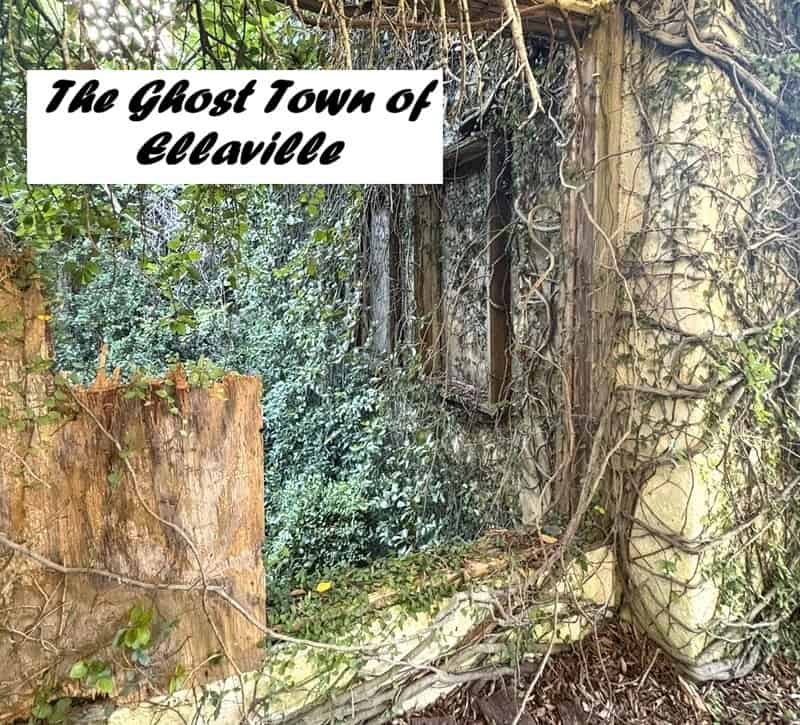
The Ghost Town of Ellaville, with rusting bridges, scattered foundations, and riverside clearings, gives you a direct window into Florida’s 19th-century lumber boom and its slow retreat into silence. Walk the same overgrown paths and stand where a timber empire once stood at the confluence of the Suwannee and Withlacoochee rivers.
This post may contain affiliate links. Please read our disclosure and privacy policy for more information.
As you explore, you’ll trace the town’s rise under powerful mill owners, learn why its economy collapsed, and spot the architectural fragments that hint at daily life long gone.
Ellaville represents a concrete link to Florida’s 19th-century lumber economy and political history. Its physical remnants connect you to the Governor who founded it, the mill-driven community that rose and fell, and the environmental changes that reshaped the Suwannee–Withlacoochee River junction.
Historical Origins Of The Ghost Town of Ellaville
Ellaville began as a riverside lumber town in the 1860s, built where the Suwannee and Withlacoochee rivers meet. The town’s growth, the Drew family’s investment, and later railroad connections shaped its rise and eventual decline.
Founding and Early Settlement Of Ellaville
Ellaville was founded around a sawmill established in the 1860s to exploit the region’s vast pine forests. Its location at the confluence of two rivers provided easy log transport and water power for milling. Early settlement attracted mill workers, merchants, and their families; the community quickly added a post office, a hotel, stores, and a Masonic lodge to serve daily life.
Population estimates reached several hundred to about a thousand people at the town’s peak in the 1870s. Economic life revolved around timber—felling, milling, and river rafting—so the town’s fortunes rose and fell with the lumber market.
Influence of the Drew Family

George Franklin Drew played a central role: he founded the mill that became Ellaville’s economic anchor and later served as Florida’s 12th governor. Drew invested capital and management expertise, professionalizing operations and drawing additional labor and commerce to the site. The town even included a prominent mansion associated with Drew’s family, signaling local status and wealth.
The Drew family’s presence linked Ellaville to wider political and business networks in post–Civil War Florida. That connection helped secure investments and transportation arrangements, but it could not insulate the town from larger economic shifts that later undermined the lumber industry.
Development During the Florida Railroad Expansion
The Florida Railroad’s arrival was a major catalyst. Rail service provided direct freight links for sawn lumber and incoming goods, lowering costs and expanding markets beyond river transport. A rail spur through Ellaville increased its accessibility and briefly reinforced the town’s commercial importance.
Rail access also reshaped settlement patterns, with businesses clustering near the depot and transportation nodes. However, when rail routes and timber resources shifted elsewhere, Ellaville’s rail advantage diminished. Without diversified industry, dependence on timber and transport lines left the town vulnerable to economic reorientation and eventual abandonment.
Economic Prosperity and Decline of Ellaville
Ellaville grew quickly because of timber, mills, and river access, then shrank as those resources and markets faded. You’ll see how the lumber economy, daily commerce, and the Great Depression each reshaped the town’s fortunes.
Role of the Lumber Industry
Ellaville centered on large-scale logging and sawmill operations led by figures such as George F. Drew and industrial partners. The town’s location at the confluence of the Withlacoochee and Suwannee rivers gave mills easy access to water transport, enabling shipment of sawn lumber and turpentine to regional markets.
Timber cut from surrounding pine and hardwood stands fed sawmills, a railroad car shop, and related businesses that employed most residents. As intensive harvesting exhausted timber stands, the mills’ output and payrolls declined. Without diversified industry or sustainable forestry practices, the town’s economic base eroded rapidly once raw material and market conditions turned.
Commercial and Social Life
You would have encountered a compact commercial strip with general stores, a post office, boarding houses, and service shops that supported millworkers and their families. Local businesses supplied tools, clothing, food staples, and fuel; social life revolved around churches, a community hall, and recreational events tied to the labor calendar.
The population once reached roughly a thousand people, sustaining schools and small professional services. When mills cut back hours or closed, cash flow to merchants evaporated quickly, forcing many shops to shutter and prompting families to relocate to larger towns with more stable employment.
Suwannee Saw and Planing Mills – Ellaville, Florida – 1884:

Image Credit: Florida Memory
Impact of the Great Depression
The Great Depression would have amplified existing weaknesses in Ellaville’s single-industry economy. Falling commodity prices reduced demand for lumber and turpentine, shrinking mill owners’ revenue and workers’ wages. Banks and credit lines tightened regionally, making it harder for remaining businesses to survive short-term shocks.
Flooding and periodic infrastructure damage added costs that small operators could not absorb. By the 1920s and into the 1930s, out-migration accelerated as residents sought jobs elsewhere; public services declined, and many buildings were abandoned, leaving the ruins and relics you can still visit today.
How To Find The Ghost Town of Ellaville
You approach Ellaville on low-lying riverine land in Madison County, Florida, at the confluence of two rivers. The site includes a short reach of riverbank, an old bridge crossing, and leveled areas where streets and building foundations remain partly visible.
Ellaville sits where the Suwannee and Withlacoochee rivers converge, surrounded by hardwood hammocks, floodplain forests, and reclaimed town footprints. You’ll find a mix of river frontage, dense understory, and scattered ruins that illustrate how nature has overtaken built features. Most of the ruins are hard to find; some are right there in plain sight, but overgrowth has overshadowed them.
Honestly, hard to find is an understatement! In two attempts, we found only the Hillman Bridge and the Old General Store. We spent hours combing the woods looking for the Drew Mansion, the Old Post Office, and the Hidden Cemetery, with no luck. All the coordinates on the maps are wrong; the overgrowth is insane, and no trails lead to them. Instead, a circling trail surrounds it all, but you would have to go into the deep brush. Lastly, given the density of he brush, you can’t even fly a drone to scope the area.
Given all this, you’ll make a third or fourth attempt to find the ruins. I have included as much as I know for each ruin below.
Architectural Remnants, Present-Day Ruins and Landmarks Of Ellaville
You’ll find a handful of tangible traces that mark Ellaville’s industrial past: a rusting river bridge, foundations of civic buildings, and scattered residential remains. Each feature gives clues about the town’s layout, industry, and daily life during its peak.
The Hillman Bridge – The Old US 90 Bridge
Address or Coordinates: 3646 205th Ln, Live Oak, FL 32060
The Hillman Bridge, also known as the Old US 90 Bridge or the Ellaville Bridge, is a historic structure spanning the iconic Suwannee River in North Florida and connecting Madison and Suwannee counties. Constructed between 1925 and 1926 by the R.H.H. Blackwell Company, it was named for Captain Winder Josephus Hillman, a local turpentine magnate and Suwannee County’s first millionaire who served on the State Road Department.
Measuring nearly 1,000 feet long, this impressive Pratt metal-truss bridge served as a vital link for cross-state automotive travel during the golden age of the Old Highway 90 transport route.

The bridge’s era of vehicular service ended abruptly in 1983 when an over-height truck struck an overhead steel crossbeam, tearing it loose and damaging the structure. Because plans for a replacement were already underway, the Florida Department of Transportation accelerated its timeline and opened the modern concrete US 90 bridge parallel to it in 1986.
Rather than demolishing it, the state transferred the historic span to its park system. Today, it rests on the edge of Suwannee River State Park near the 1800s ghost town site of Ellaville. Now restricted entirely to pedestrian and bicycle traffic, the heavily graffitied, rusting relic offers visitors breathtaking, panoramic views of the dark river waters and serves as a direct link for hikers crossing into the Twin Rivers State Forest.
Ellaville Post Office
The post office originally moved across the Suwannee River in 1867 to serve the large sawmill complex established by lumber baron and future Florida Governor George Franklin Drew. It was officially designated the Ellaville Post Office in 1872. After the timber resources were depleted, a series of mill fires, severe river flooding, and the Great Depression crippled the town. The post office permanently closed its doors in 1942.
The Ellaville Post Office Marker (In Madison):
Address or Coordinates: 420 Lakeshore Drive, Madison, FL 32340
This marker sits right outside the historic, tiny wooden building itself, commemorating it as what Ripley’s Believe It or Not once cited as the “Smallest Post Office in the World.
All my research suggests the original building moved here is still there. We didn’t visit this site, so I can’t tell you whether the building is still there. However, on my next visit, I am going to add this to my list and capture photos of what’s there.

Ellaville Post Office Ruins At the Ghost Town:
Address or Coordinates: 30° 23.183′ N, 83° 10.5′ W.
The post office’s stone foundation and scattered brickwork mark the civic center where residents picked up mail and exchanged news. You can locate a rectangular footprint of compacted earth and partial masonry where the building once stood, aligned with what would have been the main street corridor.
Archaeological indicators—nail clusters, ceramic shards, and glass fragments—appear in shallow surface contexts after storms. Those finds confirm continuous occupation into the early 20th century. If you photograph artifacts, don’t remove them; leaving them preserves context for researchers and respects park rules.
The geographic marker is at 30° 23.183′ N, 83° 10.5′ W. You can find it on NE Drew Way, about a quarter-mile east of US 90, at the entrance to the day-use picnic area of Suwannee River State Park.
The Drew Mansion
Address or Coordinates: 30.3932280, -83.1824768 *Note: Google Maps will lead you close, but these are the actual coordinates. The Google ones are incorrect.
Exterior front view of the George Franklin Drew mansion -1890.

Image Credit: State Library and Archives of Florida
Foundations, cellar holes, and occasional brick chimneys identify former home sites on gentle rises above the floodplain. You’ll notice house plots often positioned with southern exposures and short paths leading to the river, indicating domestic priorities tied to water transport and timber work.
Construction remnants include tabby-style piers, hand-hewn joist notches, and clusters of square-cut timber posts. These features point to a mix of modest worker cottages and a few larger frame houses for managers. Vegetation covers much of the layout, but seasonal leaf-off conditions make it easier to trace lot lines and building footprints.
The Old Suwannee River Store Of Ellaville
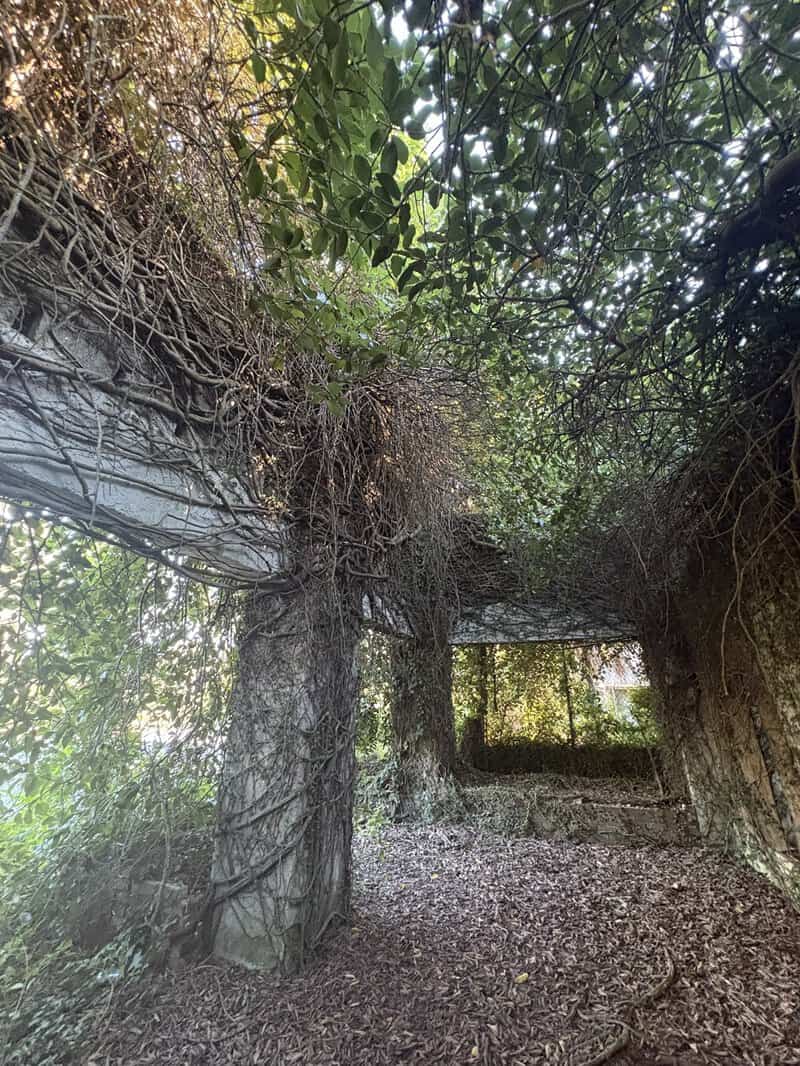
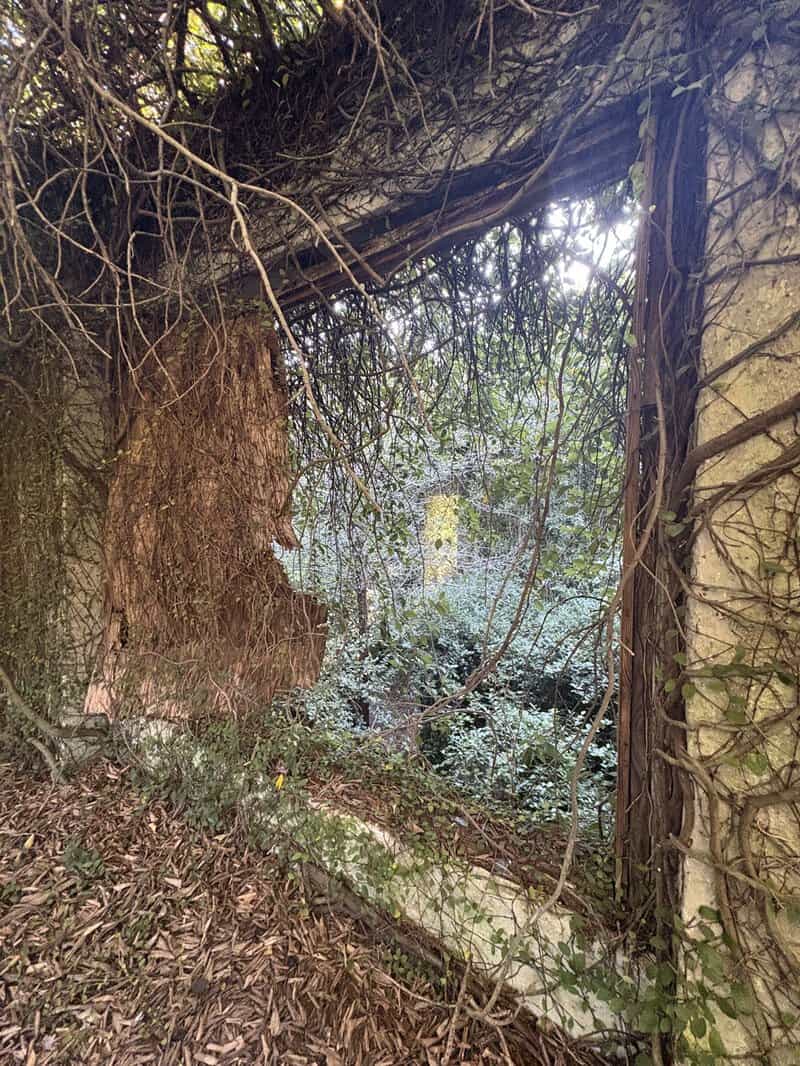
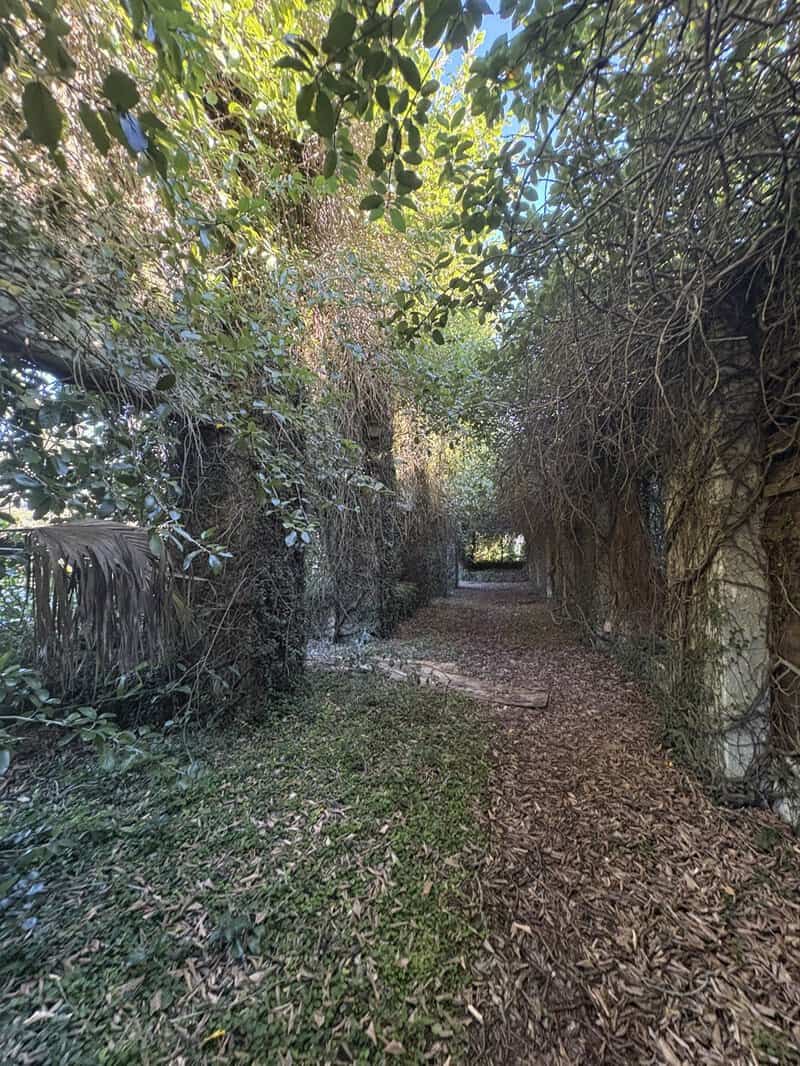
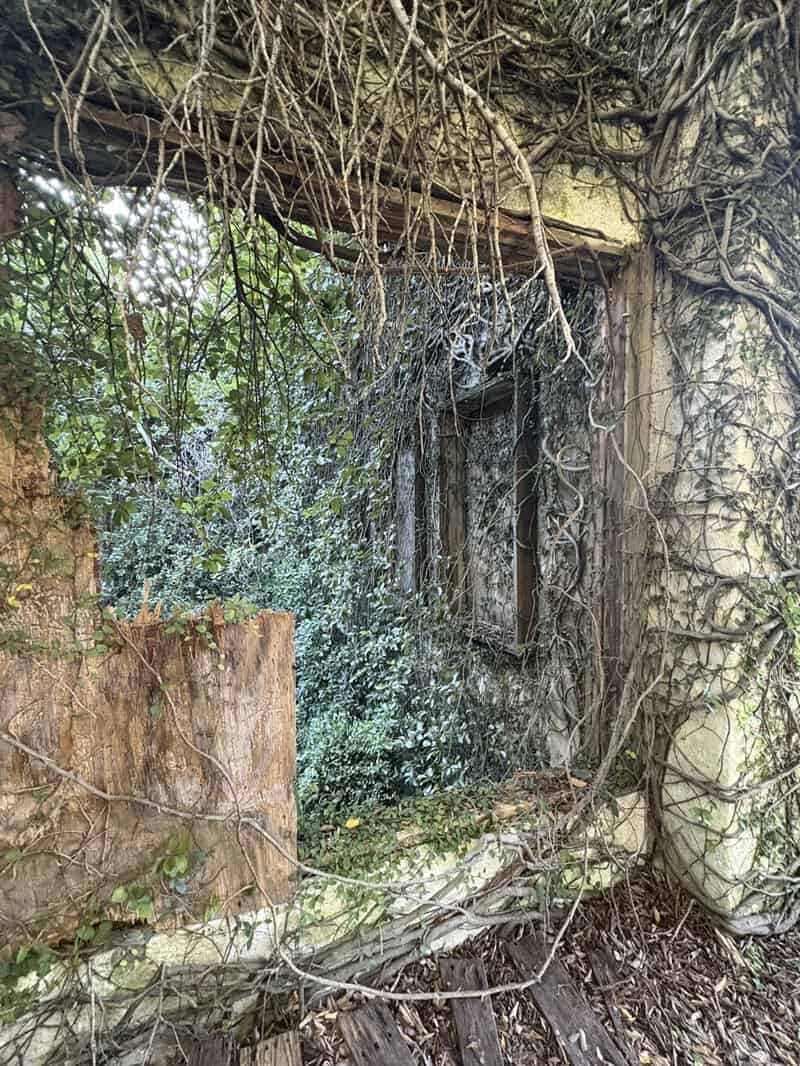
By far the easiest to find but also the least obvious. We found this on our second attempt. Ironically, it’s right in front of you where you park. It’s just covered in vines, so you don’t notice it.
When you pull up and park, head to Hillman Bridge. You’ll see a modern derelict white house. It is literally on the right-hand side of the entry to the Hillman Bridge.
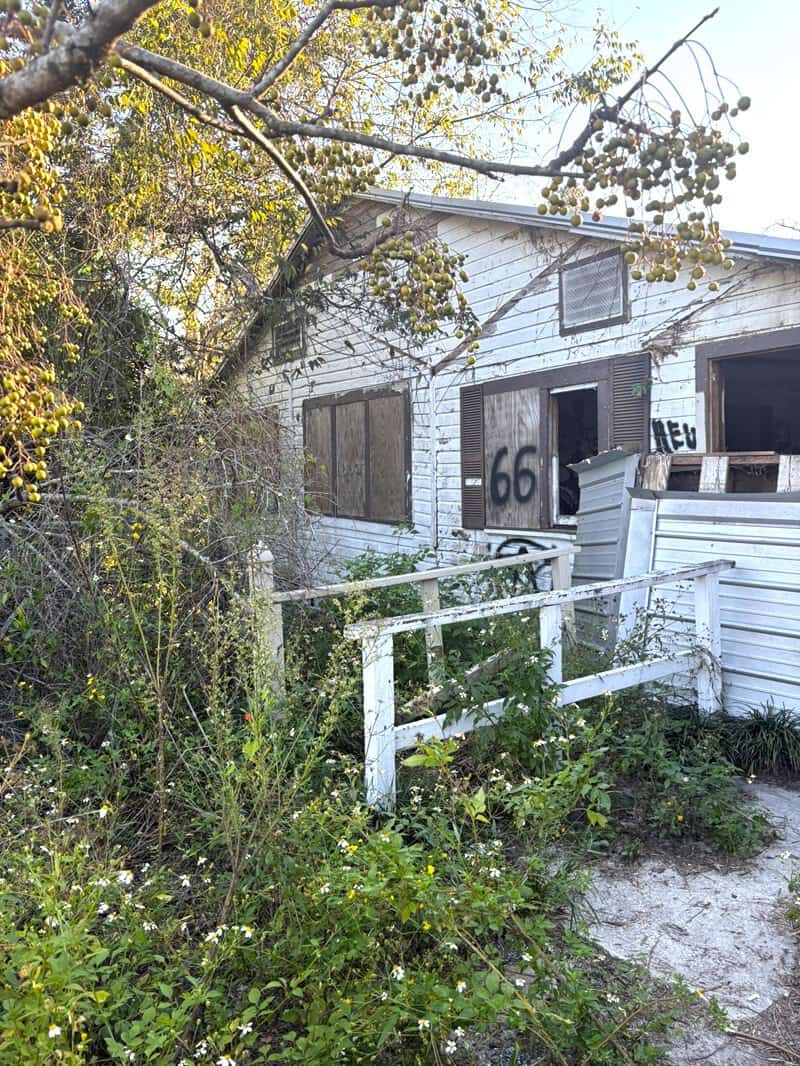
Look to the right, and you’ll see the Old General Store of Ellaville. You can access it from where the two baseball hoops are:

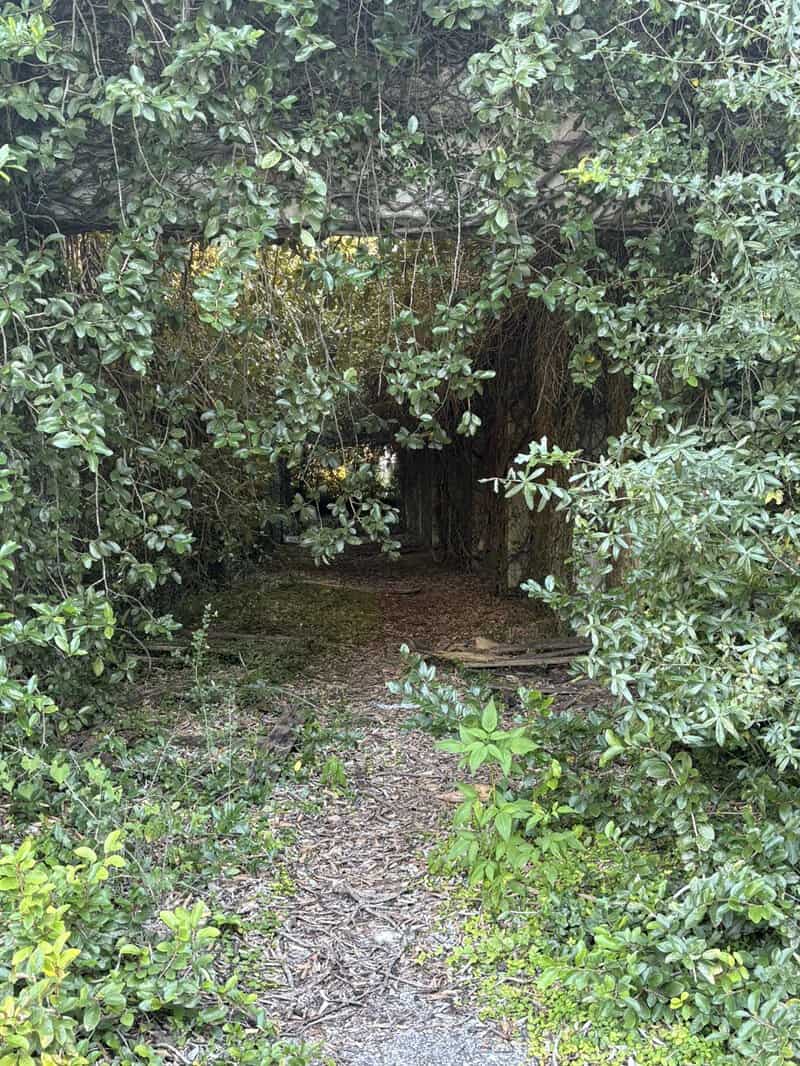
Photos of the Old General Store of Ellaville
I don’t know if this works for you. For me, this is a fascinating whimsical find. I can picture ten-plus photography scenes in here. Zero props needed, just imagination. I’ve been focused on underwater lately, but I can see a jilted or distressed bride scene amongst others.


The Ellaville Cemetery
Address or Coordinates: 30° 23.531′ N, 83° 10.984′ W
The exact coordinates for the ruins of the Ellaville Cemetery (often referred to as the Drew Family Cemetery) are 30° 23.531′ N, 83° 10.984′ W (or roughly 30.39218°, -83.18306° depending on the mapping system used). The graveyard lies deep within the overgrown woods of the Twin Rivers State Forest on the Madison County side of the river, just south of the blue-blazed hiking trail where it veers away from the active railroad tracks.
The cemetery serves as a solemn, decaying monument to the families who built Ellaville during its late 19th-century boom. Reclaimed almost entirely by the dense Florida forest, the site contains a mix of marked and unmarked graves shadowed by massive oak trees and heavy undergrowth.

Today, only a couple of readable headstones remain standing—including those of Mary Amelia Brush (born 1873) and John Clay Thomas (died 1890)—while at least seven other stone bases sit empty, their markers lost to time, elements, or vandalism. The cemetery lies roughly 50 yards from the crumbling brick foundations of the historic George Franklin Drew mansion, linking the eternal resting place of these early residents directly to the ruins of the Governor’s former estate.
Old Spring House Ruins – Suwanacoochee Spring Also Known As Ellaville Spring
Address or Coordinates: 30°23’10.8″N, 83°10’17.5″W
Suwannacoochee Spring, also known as Ellaville Spring, is a historic second-magnitude spring nestled at the scenic confluence of the Suwannee and Withlacoochee Rivers inside Twin Rivers State Forest. Famed for the striking ruins of a 19th-century heavy stone springhouse built around its basin, the site offers a window into Florida’s past, when the now-abandoned ghost town of Ellaville was a bustling timber hub.
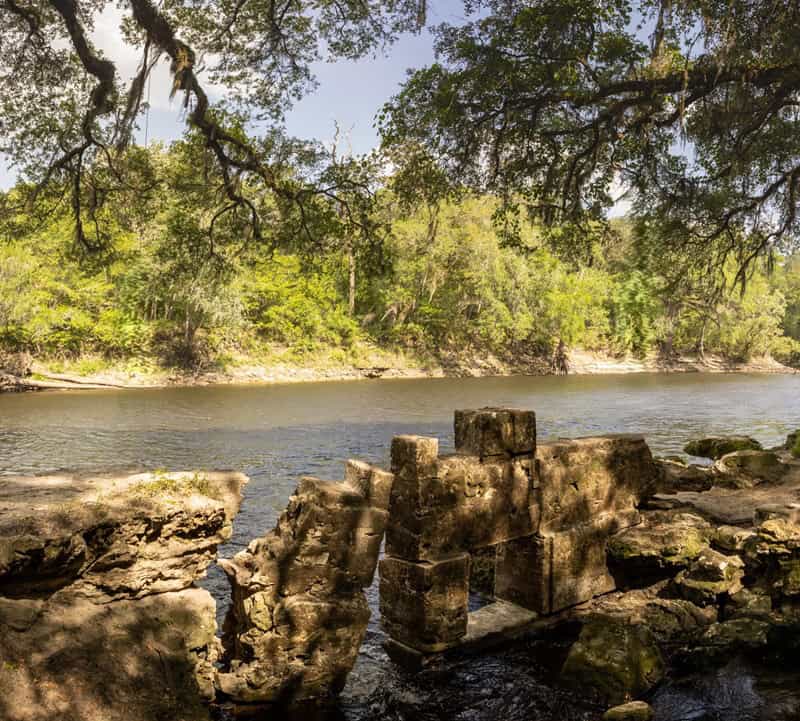
While the public-access springhouse side features a clear, sulfur-tinged pool that drops directly into the dark river waters, geological dye-trace tests have revealed that it is intricately connected beneath the riverbed to another spring vent on the opposite bank, as well as the massive, subterranean Falmouth Cathedral Cave System.
Sawmill Relics of Ellaville
During the 1870s and 1880s, Ellaville was home to the Drew & Bucki Lumber Company, which operated the largest, most productive steam-powered sawmill in Florida and the entire Southeastern United States. Founded by George Franklin Drew (who used his lumber wealth to become Florida’s first post-Reconstruction Governor), the mill employed over 500 workers and processed millions of board feet of longleaf yellow pine.

When the timber was completely depleted around 1900, the mill shut down. Over the decades, massive floods, forest overgrowth, and the shifting banks of the Suwannee River reclaimed the area. Today, the scattered sawmill relics of Ellaville are hidden within the woods of Suwannee River State Park and the Ellaville Tract:
The Massive Sawmill Flywheel
Rather than hunting through the dense underbrush, visitors can see it safely on display at the main visitor area and campground side of Suwannee River State Park. It serves as a historical monument to the industrial logging boom that once dominated North Florida. The most prominent and celebrated piece of machinery salvaged from the ghost town is the original, massive iron sawmill flywheel.
Ellaville in Local Folklore
You’ll hear stories that blend documented events with local memory: tales of the Drew family mansion standing against floods, of train whistles signaling shifts in daily life, and of lonely bridges swallowed by vines. Residents of nearby towns pass down accounts about mill workers, river navigation hazards, and the floods that pushed families to leave.
Photographers and explorers add modern anecdotes about finding foundation remnants, rusted machinery, and scattered artifacts along the Ellaville Loop Trail. These items fuel oral histories and give you tangible points to connect to those stories.
Local lore also frames Ellaville as a cautionary example of boom-and-bust resource towns, helping you understand how natural forces and economic shifts influenced settlement patterns across North Florida.
Legacy in Historical Records
You can trace Ellaville in state archives through property records, railroad timetables, and 19th-century newspapers that document the town’s founding by George F. Drew and its growth around a lumber mill. Official documents record the Florida Railroad line that served the mill and census notes that show population peaks in the 1870s.
Flood reports and economic records after the 1929–30s era describe the decline that led to abandonment. Those records matter because they let you corroborate oral accounts and date structural remains you see today.
Historians use Ellaville as a case study of industrial settlement, riverine logistics, and the impact of environmental events on community survival, so archival references to the town appear in regional histories and site inventories.
Historic Site Protection
The site lies on a combination of state-managed conservation land and privately held parcels, so protections vary by parcel. State ownership and conservation easements limit development in key areas, especially along the river corridor. Local historical societies and park volunteers conduct periodic cleanups, vegetation control, and signage repairs. These groups also compile oral histories and archival photographs to support interpretation and research.
I have to be transparent here: regardless of ownership, I can’t for the life of me understand how the relics of Ellaville are not protected or part of the National Park System.
Access To Ellaville via Suwannee River State Park
The easiest trailhead is at the Suwannee River State Park Annex off US 90, west of the Suwannee River bridge. Parking and marked trail connections put you within a short walk of the ghost town site.
The Florida Trail traverses the area and passes directly through parts of Ellaville so that you can combine a longer hike with a site visit. Trails range from packed dirt to soft, root-strewn paths; bring footwear suited for muddy conditions.
If you approach by water, launch points along the Suwannee allow paddlers to land near the bridge and explore the riverbank ruins. Check river levels and park access updates before you go to avoid closed or flooded approaches.
Frequently Asked Questions
These entries cover exact location and access, the town’s industrial roots and decline, river connections and maps, ownership and legal access, and any records of crimes or archival materials.
Where is Ellaville, Florida located, and how do you get there?
Ellaville sits in Madison County at the confluence of the Suwannee and Withlacoochee rivers in northern Florida.
To reach the area, you typically travel via local county roads from Madison or nearby towns; GPS to the river junction helps, but prepare for unpaved roads and limited signage.
What is Ellaville, Florida known for, and why was it abandoned?
Ellaville is known for its 19th-century lumber and sawmill operations established by George F. Drew.
The town declined after fires, depletion of nearby timber, shifting rail routes, and repeated flooding undermined the industry and community, leading residents to relocate.
What is the town’s history and its connection to the Suwannee and Withlacoochee rivers?
The town developed in the 1860s around a large sawmill that used the Suwannee and Withlacoochee rivers to float logs and ship lumber.
Rivers provided transport and power, making the confluence a strategic industrial site until resource exhaustion and environmental events reduced its viability.
Are there documented murders or notable crimes associated with the area?
There are no widely documented or notable murders tied specifically to Ellaville in mainstream historical summaries. For confirmation, consult county court records or local historical society files for any criminal incidents tied to the exact site.
Is the site privately owned or for sale, and can visitors legally access it?
Ownership can vary; portions of former mill towns like Ellaville may be on private land or under mixed ownership. Before visiting, verify current ownership through Madison County property records and obtain permission if the land is private to avoid trespassing.
Where can you find a reliable map, photos, or historical records of the remaining structures?
Use the Madison County property app and county clerk archives for legal maps and ownership history.
For photos and historical context, check state archives, local historical societies, university special collections, and reputable regional history websites that document Florida ghost towns.
Closing Thoughts
I have many obsessions – the water, wildlife, abandoned places, ruins, palaces, and mansions, to name a few. I’ve had Ellaville on my list for years. Even though I was unsuccessful twice in locating all of the ruins, I will be back to conquer it. One thing about me is that the more difficult the challenge becomes, the more determined I become to reach the destination or site I am exploring. Shit, it took me three visits and three attempts to find the Scottish Pyramids and a really challenging climb up the side of a mountain – but I did.
Suppose you have even a slight interest in historical sites or exploring ruins. Or, if you like a good challenge, then The Ghost Town of Ellaville should be on your list of places to explore.
Looking for more Florida? Start here:
- 10 Reasons to Visit Bok Tower Gardens
- Bartow, Florida – A Sleepy Town Making a Comeback
- Ca’ d’Zan – The Ringling Museum and Mansion
- Lakeridge Winery – Florida
- Safari Wilderness – An African Safari in Florida!
- Streamsong Resort – Why You Need to Stay and Play
- Sweet Magnolias Cafe & Gift Shop – Bartow, Florida
Brit On The Move™ Travel Resources
Ready to book your next trip? Use these resources that work:
Was the flight canceled or delayed? Find out if you are eligible for compensation with AirHelp.
- Hotels: Find the best prices; use Booking.com
- Apartment Rentals: Find the best prices on apartment rentals with Booking.com’s Apartment Finder.
- Travel Insurance: Don’t leave home without it. View our suggestions to help you decide which travel insurance is for you: Travel Insurance Guide.
- Credit Cards: Check out our recommendations for Travel Credit Cards.
- Volunteer Vacation or a Working Holiday? Check out the complete guide here!
- Rental Cars: Find the best deals here!