How to Choose Travel Insurance Deductibles: Unlock Peace of Mind with Smart Protection
A $0 deductible can feel like the obvious choice when you are booking a big trip. Then you see the premium jump and wonder whether you are paying extra for a benefit you are unlikely to use. Learning how to choose travel insurance deductibles is less about finding the lowest number and more about deciding which expenses you could comfortably handle yourself if plans go sideways.

This post may contain affiliate links. Please read our disclosure and privacy policy for more information.
For independent travelers, that distinction matters. The money you save by accepting a higher deductible might cover a night in a memorable guesthouse, a rental car upgrade for a road trip, or simply stay in your travel fund for the next adventure. But a deductible that looks good on a quote can become painful if it applies to the coverage you are most likely to need.
Start With What A Travel Insurance Deductible Actually Does
A deductible is the amount you pay out of pocket before your insurer pays an eligible claim. If you have a $250 deductible and submit a covered medical claim for $1,000, the insurer would generally reimburse up to $750, subject to the policy’s limits and terms.
That sounds straightforward, but travel insurance policies do not all apply deductibles in the same way. One plan may apply it only to emergency medical expenses. Another may apply it separately to each covered person, each incident, or each policy period. Some benefits, such as trip cancellation, trip interruption, baggage delay, or emergency evacuation, may have no deductible.
That is why the cheapest-looking plan isn’t automatically the better deal, and neither is the plan with a $0 deductible. Read the benefit table and policy wording closely enough to answer one basic question: What kind of claim would make me pay this deductible?

Choose Travel Insurance Deductibles Around Your Real Cash Buffer
Forget the theoretical answer for a moment. Think about what you could pay during a trip without wrecking your budget.
If you keep a healthy emergency fund and could absorb a $250 or $500 bill, a higher medical deductible may be a sensible way to lower your premium. This can work particularly well for a shorter domestic trip, a city break, or an international trip where you are mainly insuring against a major emergency rather than routine care.
If your travel budget is tight after paying for flights, lodging, tours, and time off work, a lower deductible may be worth the extra premium. Insurance isn’t meant to make every inconvenience free. It is to keep an unexpected event from turning into debt or forcing you to abandon the trip.
A practical test: imagine needing urgent care on day three. Could you pay the deductible immediately, then wait for reimbursement or work with the insurer’s assistance team? If the answer is no, don’t choose that deductible just because it made the quote look attractive.
A Simple Break-even Calculation
Compare the premium difference between deductible options. Say a $0 deductible policy costs $180, while the same coverage with a $250 deductible costs $135. You save $45 by taking the higher deductible.
In that case, you are accepting the possibility of paying $250 to save $45 upfront. That can still be a perfectly rational choice if you have the cash available and expect a low chance of making a claim. But it is not a bargain if $250 would be difficult to cover abroad.
Do not compare deductible choices in isolation, either. A plan with a $500 deductible and weak medical limits is not suddenly good value because the premium is low. Coverage limits, exclusions, assistance services, and the insurer’s claims process matter just as much.
Medical Coverage Deserves The Closest Look

For many international trips, the deductible decision carries the most weight for emergency medical coverage. Your US health insurance may provide limited coverage overseas, or none at all. Medicare generally does not cover care outside the US except in very narrow situations.
A high deductible can make sense when the policy offers strong emergency medical and evacuation limits and you use it to protect against a serious accident, hospitalization, or emergency transport. Those events can cost far more than a $250 or $500 deductible.
However, travelers with a chronic condition, a history of needing care while traveling, or an itinerary built around physical activities should think more conservatively. Hiking in remote terrain, riding scooters, skiing, scuba diving, or taking a long solo road trip can raise the odds that you will need medical help. That does not mean you must buy a $0 deductible. It means you shouldn’t casually choose the highest deductible without checking activity exclusions and medical limits.
Also, never assume an adventurous activity is covered because it is common. Policies can exclude or limit certain sports, altitude-related activities, racing, and motorized vehicles. A low deductible does not help if the claim itself is excluded.
Do Not Confuse Deductibles With Coverage Limits
These are different levers. A deductible is your share of an eligible loss. A coverage limit is the maximum the insurer will pay.
For example, a policy might offer $50,000 in emergency medical coverage with a $0 deductible, while another offers $250,000 with a $250 deductible. For an overseas trip, the second option may offer far stronger protection despite the out-of-pocket cost. A serious hospital stay can quickly blow past a low medical limit.
The same logic applies to emergency evacuation. Medical evacuation coverage is often one of the most valuable parts of a travel policy, especially for remote destinations, cruises, adventure travel, or trips where the nearest appropriate hospital may be far away. Focus on whether the evacuation benefit is adequate and how the policy defines an eligible evacuation. Do not let a small deductible distract you from a weak policy ceiling.
Skip The Shopping
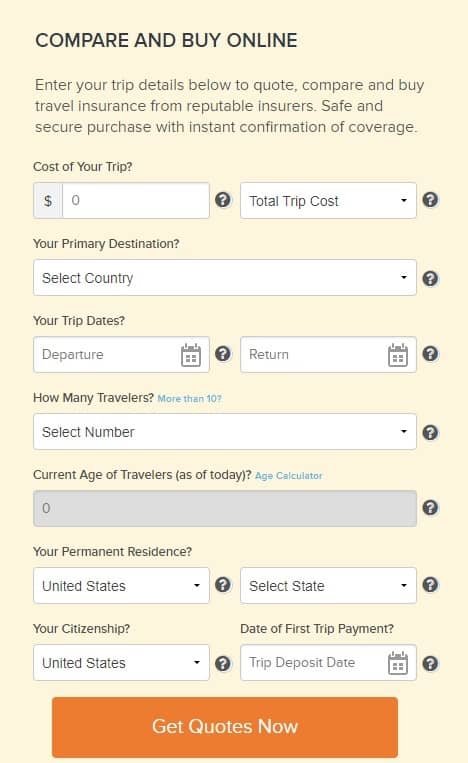
Compare All Travel Insurance Here
Think Differently About Trip Cancellation And Interruption
Trip cancellation and trip interruption coverage are usually tied to your prepaid, nonrefundable trip costs. Many policies do not apply a deductible to these benefits, but the list of covered reasons is the real deciding factor.
A standard policy may cover a serious illness, injury, certain family emergencies, severe weather, or a supplier bankruptcy if the policy includes that protection. It usually will not cover changing your mind, deciding a destination feels inconvenient, or canceling because work got busy.
If your trip includes costly nonrefundable expenses, insure the amount you would genuinely lose. There is no benefit to insuring a $6,000 trip when only $2,000 is prepaid and nonrefundable. On the other hand, underinsuring a cruise, expedition, or multi-stop international itinerary can leave you exposed to losses that a deductible would barely matter beside.
Travelers who want the broadest flexibility sometimes consider Cancel For Any Reason coverage. It is typically more expensive, has strict purchase deadlines, and often reimburses only a percentage of eligible costs. It is a separate decision from choosing a deductible, but it is worth understanding if uncertainty is your main concern.
Check Whether The Deductible Is Per Claim, Per Person, or Per Trip
This policy detail can change the math dramatically for couples, families, or friends traveling on one plan.
A $250 deductible per trip is very different from a $250 deductible per person. If two travelers each need treatment, the latter could mean $500 out of pocket. A per-incident deductible can also add up if an initial illness leads to multiple unrelated claims.
Look for clear language explaining how the deductible is applied. If the certificate is vague, contact the insurer before purchasing and keep a copy of the response with your travel documents. Insurance is full of terms that sound interchangeable until you need to file a claim.
When a $0 Deductible Is Worth Paying For
A $0 deductible is often a strong choice when you are traveling with little room for surprise expenses, are more likely to need care, or are taking an expensive trip where peace of mind has real value. It can also make sense for travelers who prefer predictable costs and do not want to debate whether a smaller medical bill is worth claiming.
It is not automatically the best pick for everyone. If the premium jump is steep, your emergency fund is solid, and the plan otherwise has excellent medical and evacuation benefits, a modest deductible can be the smarter budget move.
The sweet spot for many travelers is not the lowest or highest available option. It is the deductible you could pay without stress, paired with coverage limits that protect you from the kind of travel emergency you couldn’t fund yourself.
Before you purchase, read the exclusions, verify what your existing health insurance and credit card benefits already cover, and insure only the financial risks that would genuinely hurt. Then put any savings toward the part of travel insurance no policy can provide: making the trip worth taking in the first place.
Looking For More?
- Essential Travel Insurance for Cruises
- How to Choose Travel Insurance
- The Best Way to Choose Travel Insurance
- Travel Insurance vs Credit Card Coverage
- When Should You Buy Travel Insurance?
Brit On The Move™ Travel Resources
Ready to book your next trip? Use these resources that work:
Was the flight canceled or delayed? Find out if you are eligible for compensation with AirHelp.
- Hotels: Find the best prices; use Booking.com
- Apartment Rentals: Find the best prices on apartment rentals with Booking.com’s Apartment Finder.
- Travel Insurance: Don’t leave home without it. View our suggestions to help you decide which travel insurance is for you: Travel Insurance Guide.
- Credit Cards: Check out our recommendations for Travel Credit Cards.
- Volunteer Vacation or a Working Holiday? Check out the complete guide here!
- Rental Cars: Find the best deals here!