12 Best Caribbean Island Hikes Worth the Sweat
A Caribbean vacation does not have to mean claiming a beach chair at 9 a.m. and leaving it only for rum punch. Some of the best Caribbean island hikes lead through cloud forest, up active volcanoes, across dry cactus country, and onto ridgelines where the sea seems to surround every step.
This post may contain affiliate links. Please read our disclosure and privacy policy for more information.
The catch is that hiking here is rarely casual. Heat, sudden rain, slippery volcanic rock, and limited trail signage can turn a short route into a serious day out. That is exactly why a Caribbean hike can be the trip highlight – provided you choose one that matches your fitness, budget, and appetite for a little discomfort.
12 Of The Best Caribbean Island Hikes
1. Boiling Lake, Dominica

Dominica is the Caribbean for travelers who would rather chase waterfalls than poolside reservations, and the Boiling Lake trek is its signature challenge. This demanding full-day route crosses rainforest, river valleys, and the otherworldly Valley of Desolation before reaching a flooded volcanic fumarole that visibly steams and bubbles.
Expect roughly six to eight hours, mud, uneven ground, and weather that can change quickly. A local guide is the smart choice here, not an unnecessary add-on. Build a few buffer days into a Dominica itinerary in case rain or volcanic conditions affect access, and bring more water and snacks than you think you need.
2. Gros Piton, Saint Lucia

The twin Pitons are Saint Lucia’s calling card, but climbing Gros Piton makes the view feel earned. The trail rises steadily from the village of Fond Gens Libre through forest and increasingly exposed volcanic terrain, with the final stretch being the toughest.
This is not a cheap-and-easy stroll, but it is an achievable half-day objective for reasonably fit travelers. Local guides are required, and that is a good thing: they set a safer pace and share context that turns a sweaty ascent into more than a photo opportunity. Start early, before the sun makes the upper sections feel punishing.
3. Mount Pelée, Martinique

Mount Pelée is beautiful, moody, and a reminder that Caribbean volcanoes are not merely scenic backdrops. The mountain’s 1902 eruption devastated Saint-Pierre, and hiking its slopes brings that history into sharper focus.
The popular approach from L’Aileron is a challenging out-and-back that can take four to six hours depending on conditions. The summit is often wrapped in cloud, so go for the experience rather than promising yourself a perfect panorama. Martinique can be a strong value choice for travelers willing to use grocery stores, bakeries, and local buses instead of treating it like a resort-only destination.
4. La Soufrière, Guadeloupe

Guadeloupe’s La Soufrière is another volcanic hike that earns its reputation. The route begins in lush forest and climbs toward a stark, sulfur-scented summit landscape where vents hiss, and clouds race over the ridges.
Allow three to five hours, and don’t underestimate the wet, slippery final sections. Access can be restricted during poor weather or increased volcanic activity, so check current conditions locally before committing. Bring a light rain layer even if the coast is sunny – this mountain has its own forecast.
5. Mount Scenery, Saba

Tiny Saba has no long sandy beaches to compete with its neighbors, which is precisely why hikers should pay attention. Mount Scenery, the highest point in the Kingdom of the Netherlands, climbs through a humid, green interior that feels worlds away from the island’s dramatic cliffs and harbor villages.
Stone steps feature prominently, and the hike can be steep, but it is manageable as a half-day outing for most active travelers. Saba is small enough that staying near the trailhead can reduce transport costs. Just do not confuse small with inexpensive: lodging and supplies can cost more here because everything arrives by sea or air.
6. Mount Liamuiga, St. Kitts

Mount Liamuiga rises from St. Kitts’ lush interior, and the hike delivers the kind of rainforest-and-crater experience many visitors do not realize exists on a cruise-heavy island. Depending on the route and trail conditions, this is a strenuous five- to seven-hour day with roots, mud, steep grades, and potential views into the crater.
A guide is strongly recommended, particularly after rain when trails become slick and less distinct. If you are visiting by cruise ship, be honest about your port time. This isn’t a hike to squeeze in before an all-aboard deadline.
7. La Soufrière Volcano, St. Vincent

St. Vincent offers some of the Eastern Caribbean’s most rewarding hiking without the crowds of better-known islands. The La Soufrière climb is a long, demanding trek through banana-growing country and rainforest to the rim of an active volcano.
The payoff is a vast crater landscape that looks almost prehistoric. Conditions and permitted access can change, so book through an established local operator and keep your schedule flexible. This is a better fit for travelers spending several nights on St. Vincent than for those attempting a rushed island-hopping itinerary.
8. Blue Mountain Peak, Jamaica

Blue Mountain Peak is the classic Jamaica hike for travelers who want a story beyond the beach. Most hikers begin in the dark to reach the summit around sunrise, watching light spill over Jamaica’s ridges and, on a clear morning, toward Cuba.
The trip is often done as a long overnight or very early-morning outing, and the temperature near the top can be surprisingly cool. A guided ascent is worthwhile for navigation and transportation alone. Save money by staying in a simple guesthouse in the Blue Mountains rather than paying for a long private transfer from a resort area.
9. El Yunque Peak Trail, Puerto Rico

Puerto Rico’s El Yunque National Forest is one of the easiest Caribbean hiking wins for U.S. travelers: American citizens don’t need a passport, flights are frequent, and the forest packs serious tropical scenery into a compact area. The route toward El Yunque Peak is a demanding rainforest hike with steep pavement, forest paths, and frequent rain.
Trail openings can shift after storms and maintenance work, so do not build your entire trip around one route. If the peak trail is unavailable, shorter waterfall and forest trails still make the national forest well worth the drive. Renting a car with friends can be far cheaper than arranging multiple private tours.
10. Ram Head Trail, St. John, U.S. Virgin Islands

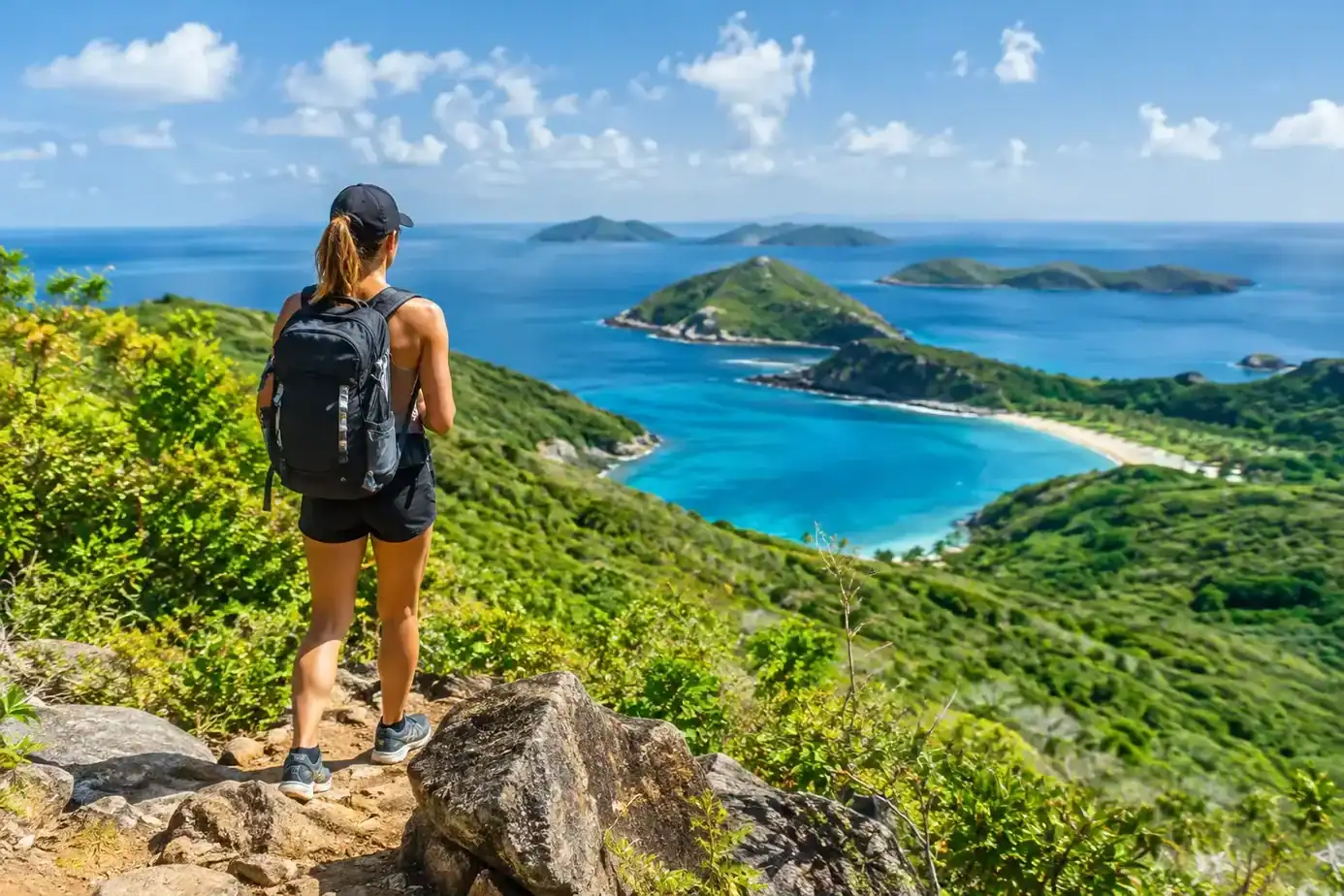
Ram Head proves the best hikes aren’t always the longest. From Salt Pond Bay, this exposed coastal route crosses dry scrubland to a dramatic headland at the island’s southern edge, with bright water and rugged shoreline in every direction.
It is relatively short but intensely hot, especially from late morning onward. Bring plenty of water, wear sun protection, and don’t expect shade. Pair it with a swim at Salt Pond Bay for one of the best low-cost adventure days in the Virgin Islands.
11. Pico Turquino, Cuba

At 6,476 feet, Pico Turquino is Cuba’s highest summit and a genuinely demanding multi-day undertaking in the Sierra Maestra. The trail is less about polished infrastructure and more about forest, history, remoteness, and the satisfaction of reaching a summit far removed from Havana’s streets or Varadero’s resorts.
Logistics can be more complicated than on other Caribbean islands, with permits, guides, transportation, and lodging requiring advance planning. This is not the hike for travelers who dislike uncertainty. For those who enjoy a more independent, ground-level view of Cuba, it can be exceptional.
12. Christoffelberg, Curaçao

Curaçao’s Christoffelberg offers a completely different Caribbean hiking personality: dry, rocky, cactus-dotted, and exposed. The climb in Christoffel National Park is short compared with many volcano routes, but the final scramble is steep enough to demand decent balance and sturdy shoes.
Go at opening time. Park staff may limit summit access later in the day when temperatures rise, and that is sensible rather than inconvenient. Curaçao’s arid climate means you can often plan around rain more easily, but it also means sun and dehydration are the real concerns.
How to Pick the Best Caribbean Island Hikes for Your Trip
Choose a hike based on your available time, not just the photo you want. A cruise stop may suit Ram Head or a short El Yunque route, while Boiling Lake, Pico Turquino, and La Soufrière in St. Vincent deserve a trip built around them. Trying to force a major ascent into a tight schedule is how travelers end up paying for a tour they barely enjoy.
Budget also matters. Guided hikes may look costly upfront, but on volcanic and rainforest trails they often include the safety, transportation, route knowledge, and local insight that would otherwise require separate spending. Save on the parts that do not improve the day: pack refillable water bottles, buy picnic supplies locally, use shared taxis when practical, and stay near the trail area when an early start is essential.
Practical Rules for Caribbean Trail Days
Caribbean weather is not a minor detail. Rain can make volcanic rock slick, cloud cover can erase views, and hurricane-season downpours can close trails with little warning. Check the evening locally before, then check again on the morning of your hike.
Wear shoes with real grip, carry at least two liters of water for longer or exposed routes, and pack electrolytes, snacks, insect repellent, and a rain layer. Avoid hiking alone on poorly marked backcountry routes. A solo trip doesn’t require a solo summit attempt, especially when trail conditions, volcanic activity, or flash flooding are part of the equation.
The smartest Caribbean hiking trip leaves room for adjustment. Pick one ambitious trail, add a lower-stakes backup plan, and let the forecast make the final call. The beach will still be there afterward, and that post-hike swim will feel far better when you have earned it.
Looking for more inspiration? Start here:
- 6 Best Ways To Explore The Caribbean Islands
- 9 Affordable Caribbean Islands Worth Booking
- 11 Best Hidden Gems Caribbean Travelers Miss
- Barbados’s Shipwrecks
- Bermuda Car Rentals – Why You Should Avoid Them
- Cuba – Yes, Americans can still travel To Cuba!
- Oasis of The Seas – The Amplified Version
- Renting a Car in Puerto Rico – The Complete Guide
- The Salt Flats of Puerto Rico
- Turks and Caicos – Things To Do
Brit On The Move™ Travel Resources
Ready to book your next trip? Use these resources that work:
Was the flight canceled or delayed? Find out if you are eligible for compensation with AirHelp.
- Hotels: Find the best prices; use Booking.com
- Apartment Rentals: Find the best prices on apartment rentals with Booking.com’s Apartment Finder.
- Travel Insurance: Don’t leave home without it. View our suggestions to help you decide which travel insurance is for you: Travel Insurance Guide.
- Credit Cards: Check out our recommendations for Travel Credit Cards.
- Volunteer Vacation or a Working Holiday? Check out the complete guide here!
- Rental Cars: Find the best deals here!