Sulfur Spring in Welaka State Forest: Discover a Refreshing Natural Wonder
Sulfur Spring in Welaka State Forest is one of those jewels that you just sort on land on by accident. Every time I talk to people about my fascination with springs, they ask me if I know any remote ones. I know hundreds, but this one was an added bonus from my visit to Mud Spring.

This post may contain affiliate links. Please read our disclosure and privacy policy for more information.
For most of us, Sulfur Spring in Welaka State Forest is not even on the radar, and for many reasons. It’s a decent hike to get to; it’s small and shallow, with a tinge of sulfur. However, from my perspective, this is a slice of heaven if you are willing to hike deep into Welaka State Forest to find it.
About Sulfur Spring in Welaka State Forest
Sulfur Spring is tucked into Welaka State Forest along a quiet trail, where narrow, sulfur-tinged water and several vents feed a short run to the St. Johns River.
The spring issues from a vent set in clayey sand within a shallow limestone-and-sand substrate typical of northeast Florida. Groundwater moves through karstified zones in the subsurface, then discharges where the overlying sediments thin, forming a spring boil at the vent.

You can see a pronounced boil over the primary vent; that indicates upward groundwater pressure and a relatively direct conduit from the aquifer. The pool measures roughly 60–90 feet across, with the vent area about 20 feet in diameter, and a short run that carries water to the St. Johns River.
Local topography and nearby river stages also affect discharge. When river levels rise, mixing between spring water and river water can increase, changing visible clarity and reducing the apparent boil intensity.
Florida Springs Etiquette – Leave No Trace Behind
It’s everyone’s right to visit Florida Springs. However, we all have a moral duty to leave them as we found them or better for others to enjoy. Here are some simple steps to ensure that our springs are kept pristine:
- Plan Ahead & Prepare: Know regulations (like springs protection zones), check the weather, and have appropriate gear.
- Travel & Camp on Durable Surfaces: Stick to trails; avoid creating new paths.
- Dispose of Waste Properly: Pack out everything (trash, food scraps, cigarette butts).
- Leave What You Find: Take photos, not plants, rocks, or shells.
- Minimize Campfire Impacts: Use designated rings and ensure fires are cold and out.
- Respect Wildlife: Observe from a distance; do not feed animals.
- Be Considerate of Others: Keep noise down and remove all personal items (chairs, toys, kayaks) daily.
Specific Florida Springs Actions
- In the Water: Don’t stand on vegetation or kick up silt; use mushroom anchors instead of hooks; trim boat motors in shallow areas; avoid landing boats on banks.
- On Shore: Fill holes in the sand; don’t climb trees or use rope swings.
- Boating: Turn off propellers when waiting for swimmers to pass to protect vegetation and wildlife.
Go The Extra Mile
- Pick up any trash others left
- Report any violators
- Report any distressed wildlife
Swimming and Wading
Sulfur Spring in Welaka State Forest is a small and shallow spring. It reminded me a little of Hightower Spring in that it’s in the middle of nowhere, a random water hole that glitters. There are no man-made walkways or stairs to access it. This truly is an untouched spot.
Sulfer Spring is not deep enough to actually swim, but you can definitely wade here. Or, put chairs in the water and relax or lounge on a float. The bottom can be uneven, and visibility can be reduced by the sulfur tint.
I stumbled on Sulfur Spring right before sunset, so I could not spend hours here on my first visit. I think for some people, the sulfur smell might be enough to put them off. I didn’t think it was any worse than the smell of well water in Florida. But, as with all things Florida, the clarity of the water and sulfur levels all depend on rainfall. The surrounding wetland and upland habitats also influence water clarity and chemistry. It’s a small trade-off for such a pretty little spring that you can almost always have to yourself.
Something else that came to mind is that, given how shallow Sulfer Spring is, anyone of any age, regardless of whether they can swim, could easily enjoy the spring. The only challenge is the hike, which is mostly flat but not even, and definitely wet in many places.
It’s also a perfect spot for a date – even if you just picnicked by the spring.
Amenities at Sulfur Spring in Welaka State Forest
The only on-site amenity is a picnic table. There is no developed swimming area or lifeguard, but that’s the charm. There is a restroom at Mud Springs.

How To Get To Sulfur Spring in Welaka State Forest
Address: Welaka State Forest Headquarters: 794 County Road 309, Welaka, FL 32112
Located roughly 1.2 miles north of the entrance, this trailhead sign is a great place to stop before you enter Welaka State Forest, as there’s a historical fire tower at this spot.

This sign marks the entrance to Welaka State Forest in Putnam County, Florida, Johns Landing Trailhead Sign & Parking. This sign sits right next to the historic Welaka Fire Tower, which is worth a look.
Welaka Fire Tower
The steel structure standing directly behind the Johns Landing Trailhead entrance sign is the Welaka Fire Tower, a historic 100-foot-tall Aermotor steel lookout tower operated by the Florida Forest Service.
Built between the late 1930s and 1950s, this structure belongs to the primary era of fire detection in Florida. During this window, the state erected roughly 200 steel towers to protect vast timberlands from devastating seasonal wildfires.
For decades, forest rangers or lookout staffed the small cab at the very top of the tower during peak fire season. Lookouts spent long, isolated hours scanning the horizon. When smoke was spotted, they used a specialized alignment tool, an alidade, to measure the exact bearing. By crossing this line with a reading from a neighboring tower, the agency could instantly pinpoint the exact coordinates of a wildfire.
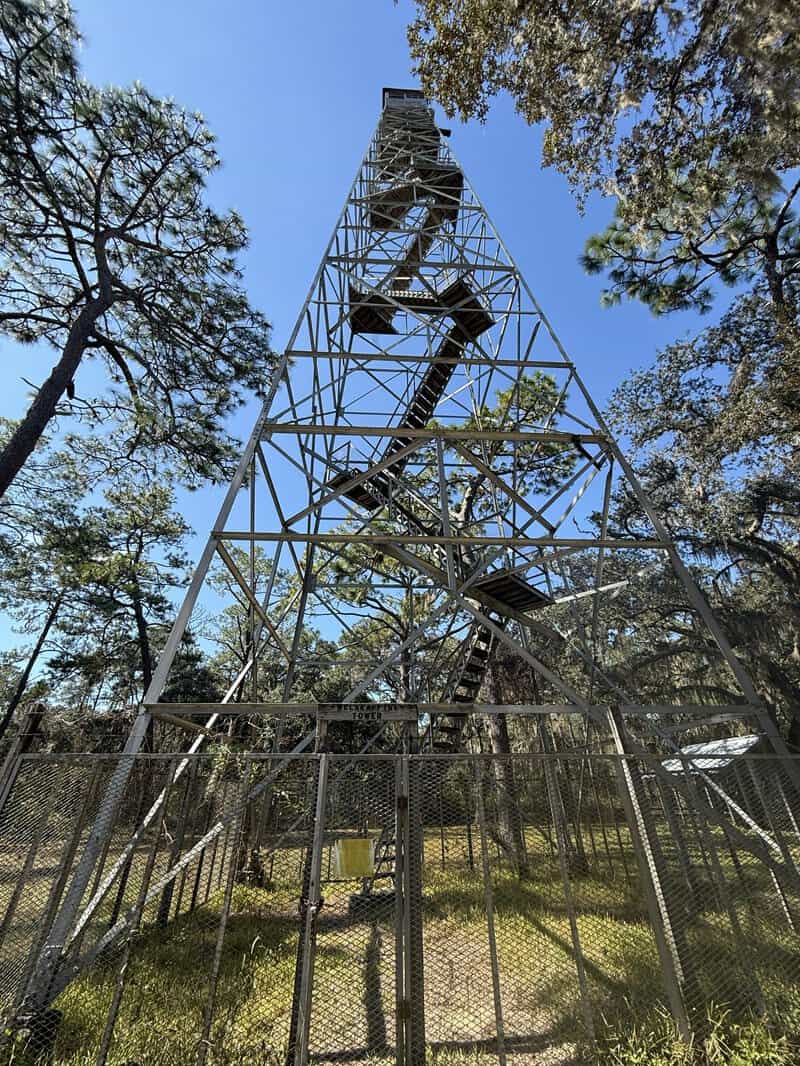
The advent of modern technology, cell phones, satellite tracking, and routine aerial spotter plane patrols made stationary watchtowers entirely obsolete by the mid-1990s. Only about 100 of these towers still stand across the state.
Today, the tower is no longer operational, and the stairs are fenced off to the public due to safety liabilities. However, it remains perfectly preserved as an iconic landmark for hikers accessing the Welaka State Forest trail system.
Parking And Fees At Mud Springs and Sulpher Springs in Welaka State Forest
Once you arrive at the location, there are bathrooms and information on how to self-pay.
Day Pass: $2 per individual, valid from sunrise to sunset. Good for all state forests visited on the same day.
Annual Pass: $45 for unlimited day-use entry across Florida state forests.
Children: Ages 0 to 6 are free.
It might be advisable to pay in advance. To pay, scan the Q-Code and purchase a day pass. If you don’t have a signal, you won’t be able to pay on the spot, but you can pay later.

The Mud Springs Loop Trail
The trailhead sits about 1.5 miles south of Welaka on Highway 309, with a clear parking area at the trail entrance.
The Mud Springs loop trail provides the primary access. The entire loop is roughly 2.5 miles long. If you just do Sulfur Spring, it’s a 1.1-mile loop. If you are in the area, you should do both Sulfur Spring and Mud Springs. Many visitors extend the route on informal paths to reach the spring and river.
PRO TIP: I didn’t have a map, and I somehow backtracked from Mud Springs and did the entire loop, whereas I could have cut across and made it much shorter.

As you approach, you will first see the sign, the clear, cool spring water emerging from visible vents.

Trail surfaces are natural singletrack and forest path, so expect roots, sandy stretches, and occasional muddy sections after rain. Bring navigation (map or phone) and follow blazes; short spur paths to the spring can be unmarked.
Unique Mineral Composition
The spring water contains dissolved sulfur compounds that produce a mild to noticeable sulfur odor. Sulfur typically originates from anaerobic sulfur-reducing conditions in the aquifer or from reactions between groundwater and sulfide-bearing sediments.
You can expect clear water visually, but measurable concentrations of sulfide or sulfate compared with those of non-sulfur springs. Other common ions in the regional groundwater include calcium, magnesium, bicarbonate, and sodium; these control hardness and buffering capacity.
A visible clue to chemistry is the combination of crystal-clear spring water near the vent and darker tannic water downstream, where river or swamp water mixes in. That mixing alters pH slightly and increases dissolved organic content as the flow reaches the St. Johns River.
Wildlife Observation
The river corridor hosts wading birds, turtles, and occasional river otters; you may also see songbirds and white-tailed deer in the upland areas. There are also bears and gators in the area. This is one of those random hikes where I wish I had brought some form of protection. It’s another reason why I didn’t stay past dusk. None of the trails is lighted, and they are completely natural.

Use binoculars and stay on trails or at the riverbank to avoid disturbing nesting or basking animals. Keep pets leashed and food secured; feeding wildlife can alter their behavior and be illegal.
Historic and Cultural Significance
Locals long told of the spring’s “sulfur cure,” claiming the water eased skin and joint ailments. Tourism brochures from the early 1900s promoted bottled mineral water sourced from deep underground, and that commercial memory survives in town histories and place names.
You can still hear accounts linking the spring to seasonal bathing and river-based recreation. Fishermen and older residents describe family visits, picnics, and boat trips upriver to the spring’s run. These oral histories emphasize the spring’s role as a community gathering spot rather than a large park-style attraction.
Here’s an example: Suwannee Springs, Florida – The Oldest Spring in Florida
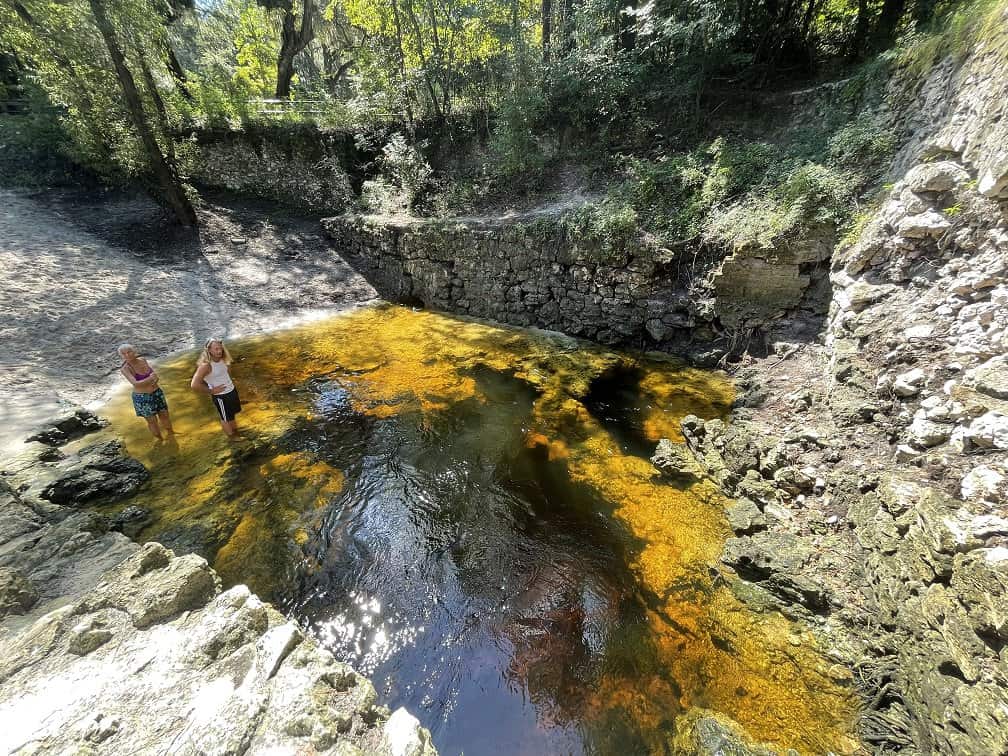
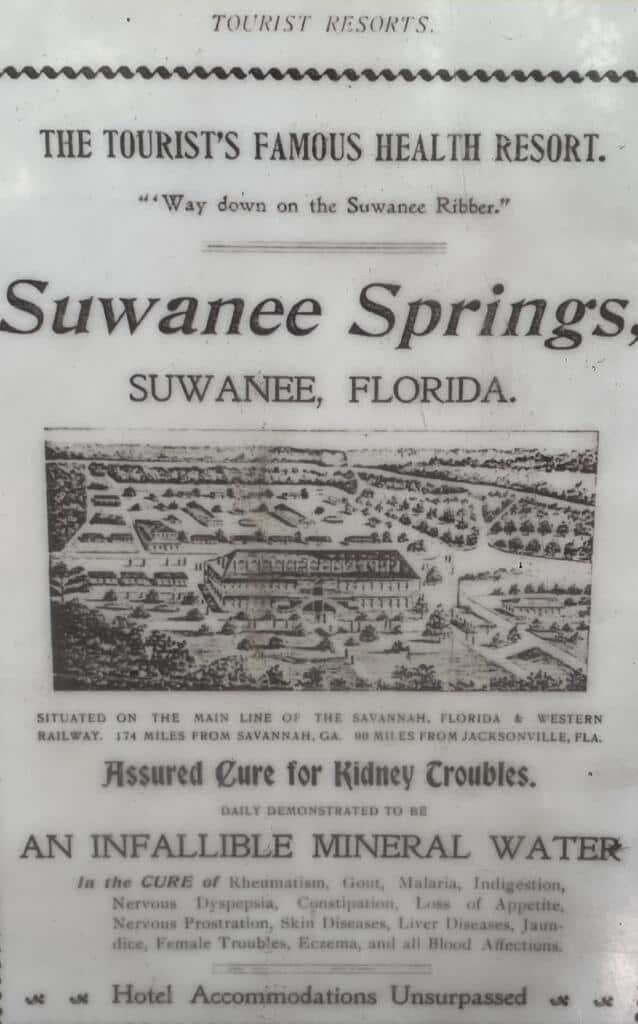
Local lore also includes tales of hidden caverns and submerged vents; those stories reflect the spring’s mysterious appearance and sulfur scent, not verified geological hazards. Use caution when exploring: the narratives capture cultural meaning more than scientific fact.
Archaeological Discoveries
Archaeologists and historians note repeated human presence near the spring dating back centuries. Surface finds and survey records along the St. Johns corridor indicate Indigenous camps and travel routes that used riverine springs as water and food resources.

You will encounter artifacts in museum records and site reports—lithic tools, pottery sherds, and midden deposits—that are consistent with seasonal occupation. These materials align with broader patterns of prehistoric and early historic settlement in Putnam County.
Professional surveys around Welaka Spring (aka Mud Springs) and adjacent runs document disturbed soils and cultural layers, suggesting repeated reuse into the 19th and early 20th centuries. Those layers help you trace transitions from Indigenous use to European-American recreation and commercial bottling efforts.
Closing Thoughts
If you want a less-crowded natural spot to hike, observe unique water chemistry, and connect with local history, this spring delivers a compact, off-the-beaten-path experience.
Looking For More Springs?
- Convict Spring, Florida: The Rich History & Enchanting Attractions
- Devil’s Den, Florida – A Prehistoric Spring
- Fanning Springs: The Ultimate Visitor’s Guide
- Hightower Spring: One Of Florida’s Most Enigmatic Hidden Gems
- Kings Landing, Florida, and The Iconic Emerald Cut
- Manatee Springs Park: A Tranquil Paradise Awaits
- Mud Springs, Florida: Discover This Hidden Gem!
- Rainbow Springs State Park
- Royal Springs – Suwannee County’s Hidden Gem
- Seminole Spring: The Tranquil Heart-Shaped Spring With Secrets
- Wakulla Springs and Lodge
- Weeki Wachee Springs
- Wes Skiles Peacock Springs State Park
Brit On The Move™ Travel Resources
Ready to book your next trip? Use these resources that work:
Was the flight canceled or delayed? Find out if you are eligible for compensation with AirHelp.
- Hotels: Find the best prices; use Booking.com
- Apartment Rentals: Find the best prices on apartment rentals with Booking.com’s Apartment Finder.
- Travel Insurance: Don’t leave home without it. View our suggestions to help you decide which travel insurance is for you: Travel Insurance Guide.
- Credit Cards: Check out our recommendations for Travel Credit Cards.
- Volunteer Vacation or a Working Holiday? Check out the complete guide here!
- Rental Cars: Find the best deals here!