Wes Skiles Peacock Springs State Park: One Of Florida’s Best State Parks
Wes Skiles Peacock Springs State Park is a 733-acre state park located in Live Oak, Florida. The park is named after Wes Skiles, a world-class explorer and diver who dedicated his life to exploring and documenting the underwater world. The park is renowned for its turquoise waters, extensive trails, and extensive underwater cave system, making it a popular destination for swimming, snorkeling, scuba diving, hiking, picnicking, and wildlife viewing.
I’ve visited hundreds of springs across Florida. This one is in my top five for a few reasons.
- 1. It has multiple springs and sinkholes in the same area.
- 2. Each watering hole is dramatically different.
- 3. It’s exceptionally affordable – $4 per car. 3. It offers a plethora of recreational activities.
- 4. While not as well-known or popular as some of the more famous springs in Florida, this park has great amenities. The picnic tables seem to be placed in the most picturesque spots.
- 5. While the signs clearly say don’t jump at Orange Grove, everyone does. Controversial to those who follow all the rules, but watching the kids bomb dive in – or participating is too much fun not enjoy.
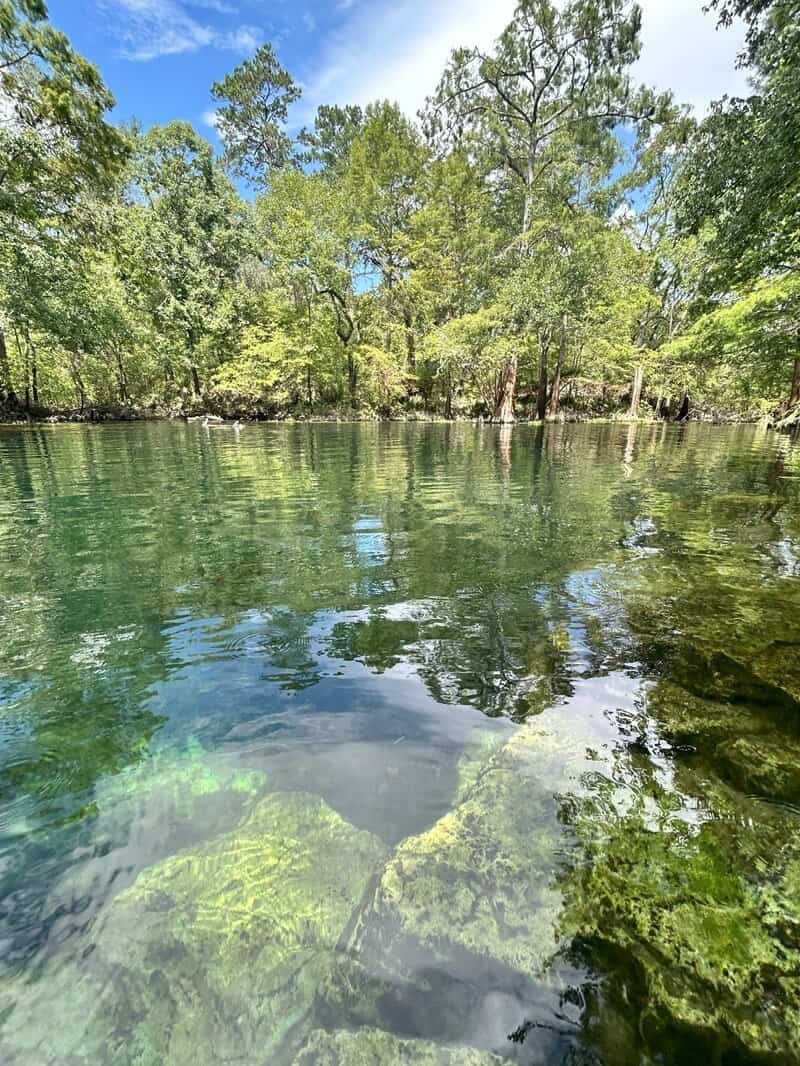
- 6. It’s absolutely pristine. I’ve never met a spring that I didn’t like, but Wes Skiles Peacock Springs is by far one of the most beautiful ones.
This post may contain affiliate links. Please read our disclosure and privacy policy for more information.
The park boasts one of the most extensive underwater cave systems in the world, spanning more than 30,000 feet of passages. The cave system is a popular destination for experienced cave divers from around the world, who come to explore its depths. However, visitors who are not keen on exploring the underwater world can still enjoy the park’s nature trail, which follows the cave system below their feet. The park also has picnic facilities with tables and grills, interpretive exhibits, and other accessible amenities for all visitors.
This park has two major springs (Peacock and Bonnet), a spring run, six sinkholes, and an award-winning nature trail. And, as famous as it is for its diving, it is a lesser-known spring that most don’t even have on their radar, making it a fantastic day out.
History of Wes Skiles Peacock Springs State Park
Wes Skiles Peacock Springs State Park has a rich history dating back approximately 1,000 years, when the land was uplifted from the floor of the Gulf of Mexico to rest on a limestone platform. The park was established in 1993 after the state of Florida acquired it.
In 1985, the Nature Conservancy purchased 250 acres of land in the area to protect the unique stand of hardwood forest, including Florida maples, and the surrounding cave systems. The park is now a popular destination for picnicking, swimming, diving, and wildlife viewing. Visitors can observe a diverse range of animals, including deer, bobcats, raccoons, squirrels, beavers, and otters.

Wes Skiles: Photo Credit: Gainesville Sun
In 2011, the park’s name was amended to honor the late Wes Skiles, a cave diver, explorer, photographer, documentary filmmaker, and springs advocate who worked tirelessly throughout his life to protect this park and all of Florida’s water resources. and it was later named after Wes Skiles, a renowned cave diver and underwater photographer, who passed away in 2010.
Prior to the 2011 renaming, the park was called Peacock Springs State Park.
Florida Springs Etiquette – Leave No Trace Behind
It’s everyone’s right to visit Florida Springs. However, we all have a moral duty to leave them as we found them or better for others to enjoy. Here are some simple steps to ensure that our springs are kept pristine:
- Plan Ahead & Prepare: Know regulations (like springs protection zones), check the weather, and have appropriate gear.
- Travel & Camp on Durable Surfaces: Stick to trails; avoid creating new paths.
- Dispose of Waste Properly: Pack out everything (trash, food scraps, cigarette butts).
- Leave What You Find: Take photos, not plants, rocks, or shells.
- Minimize Campfire Impacts: Use designated rings and ensure fires are cold and out.
- Respect Wildlife: Observe from a distance; do not feed animals.
- Be Considerate of Others: Keep noise down and remove all personal items (chairs, toys, kayaks) daily.
Specific Florida Springs Actions
- In the Water: Don’t stand on vegetation or kick up silt; use mushroom anchors instead of hooks; trim boat motors in shallow areas; avoid landing boats on banks.
- On Shore: Fill holes in the sand; don’t climb trees or use rope swings.
- Boating: Turn off propellers when waiting for swimmers to pass to protect vegetation and wildlife.
Go The Extra Mile
- Pick up any trash others left
- Report any violators
- Report any distressed wildlife
Peakcock Spring I, II, and III
Peacock Spring is a first-magnitude spring that discharges an average of 42 million gallons of water per day. The spring vent is located at the bottom of a large sinkhole that is approximately 180 feet deep. The vent is oval-shaped and measures about 50 feet by 20 feet.
This is where you’ll find most non-divers. There are two main entry points, and you can swim between them. Although I must tell you that while these springs are pristine, there’s thick vegetation if you swim up or down the Peakcock Springs run. I didn’t do it, but the Monkey did.
Peakcock Spring I – Entry Point One:
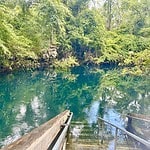
This entry point has stairs leading into the water; it’s at the top of the spring run at the spring head.

Peakcock Spring II – Entry Point Two
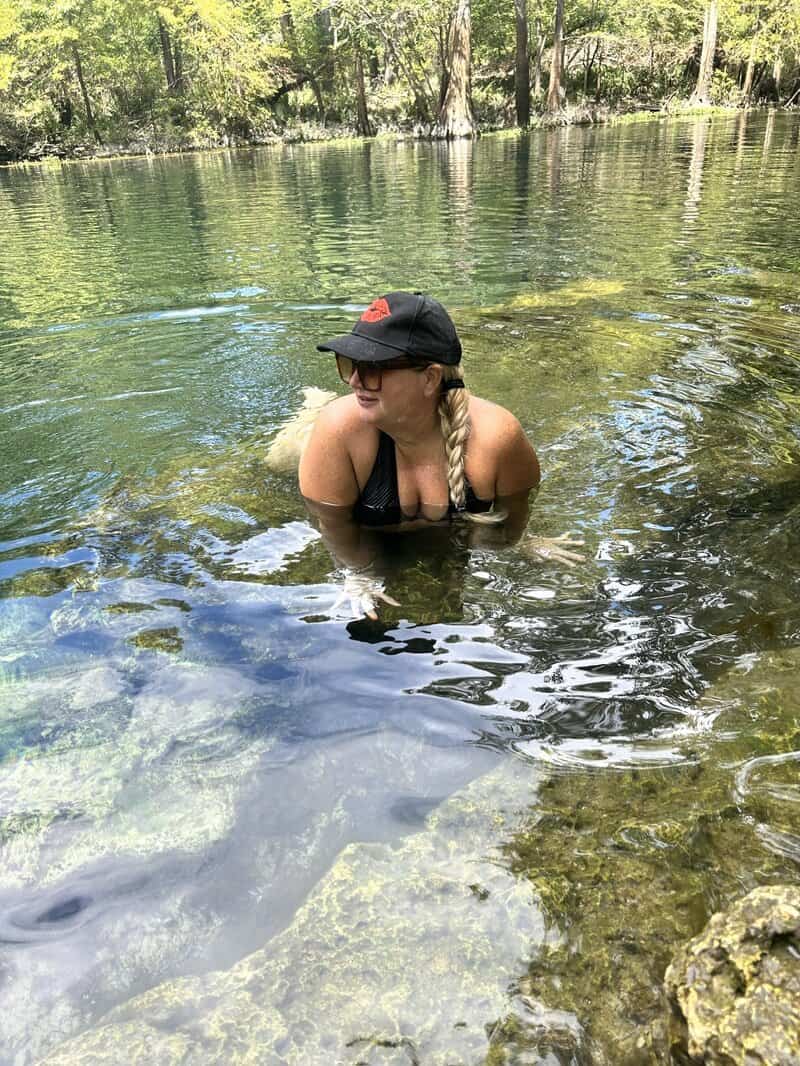
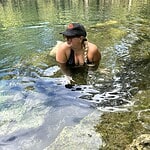
This one is my personal favorite. There is a stone shelf you can easily sit on and ease into the water. There’s a picnic table at this spot and the underwater views are amazing. There are typically fewer people at this spot, which is slightly south of the first entry point.


Peakcock Spring III – Entry Point 3
Entry Point III provides direct access to the renowned Peacock Springs system, efficiently connecting divers to the Peanut line at the 950-foot point—making it a strategic entry for exploring this remarkable underwater cave network.

Waterhole III provides direct access to the renowned Peacock Springs system, efficiently connecting divers to the Peanut line at the 950-foot point—making it a strategic entry for exploring this remarkable underwater cave network.
Challenge Sink
Challenge Sink at Wes Skiles Peacock Springs State Park offers divers a welcome sight: a small collapsed opening in the underwater cave system. Nestled between Orange Grove and Peacock Springs, this natural window into the cave offers a convenient spot to surface for a breather or an emergency exit.
Cisteen Sink
Tucked within Wes Skiles Peacock Springs State Park, Cisteen Sink offers a challenging adventure for experienced divers. This small, silty entrance is just one of nine gateways into North Florida’s renowned underground cave system—a world reserved for certified cave divers ready to navigate its technical demands and explore the extensive passages hidden beneath the surface.
Olsen Sink – Pothole Sink
Olsen Sink (also called the Pothole) is a karst window in the cave system of Wes Skiles Peacock Springs State Park, located between Peacock 1 and Olsen Sink. Its limited daylight makes it unsuitable for cavern diving.

Bonnet Spring
You’ll find Bonnet Springs nestled within Peacock Springs State Park property. Watch for the access road on your right, just before the road curves left toward the main park entrance. Here’s the catch: the gate stays locked, and you’ll need to get the combination directly from the park ranger.
This isn’t a dive site for beginners—you’ll need at least 100 cave dives under your belt and a guide who’s explored the system before. The park keeps things exclusive, with just 2 dive teams per day, each capped at 4 divers. At least one person on your team must already be on the ranger’s list of approved divers who’ve tackled this system. Every single dive requires fresh permission from the ranger. If you can’t find them? Sorry, no dive today. Keep it simple: no reservations, no scooters, no stage bottles, no training dives, and no deco bottles allowed.
Orange Grove Sink Peacock Springs State Park
Orange Grove Sink is a large sinkhole and spring feature within Peacock Springs State Park. It’s part of a network of springs and sinks connected by one of the longest underwater cave systems in the continental United States. Diving, swimming, and snorkeling are permitted here, and the area has stairs and a raised walkway for safe access to the water.
One thing to consider as you plan your trip conditions like water level vary seasonally. It’s not uncommon for Orange Grove to be closed, so make sure you check before you arrive.

The sink acts as an entry point into the cave system via two major underwater tunnels: Lower Orange Grove (deeper, up to ~180 ft/55 m) and Upper Orange Grove (shallower, 40–70 ft/12–21 m) — both used by experienced cave divers.
The surface of the sink often has duckweed, a floating plant that gives the water a distinctive green layer. For those brave enough to get in when it’s covered, the water beneath it is clear and inviting for divers. And, it presents access to the cave system.

You Can Read More About Orange Grove Sink here: Orange Grove Sink
Jumping Into Orange Grove
This is a very popular place for jumping! Yes, it’s prohibited. Just as jumping off bridges on most bodies of water is. Regardless, people will and do jump at their own risk. Now, it’s clearly signposted that jumping off the rocks at Orange Grove is not allowed; there is a well-trodden trail leading to it. Right or wrong, people jump into Orange Grove. You’ll see it for yourself if you visit.
Visitors who violate park regulations may be subject to fines or other penalties, so bear this in mind if you decide to “break” the rules.


Because of the connected underground caves, certification requirements and safety rules are strictly enforced for diving.
Cave Diving At Wes Skiles Peacock Springs State Park
Wes Skiles Peacock Springs State Park is renowned for its extensive underwater cave system, which spans over 33,000 feet and attracts cave divers from around the world. The park offers a variety of cave diving experiences, ranging from shallow dives to advanced penetration dives. It is recommended that only certified cave divers with the appropriate training and equipment explore underwater caves.

The cave systems are formed by the dissolution of the limestone bedrock by the acidic water of the springs. Narrow passages, large rooms, and vertical shafts characterize the cave systems.
The cave systems are accessible to certified cave divers, who can explore the underwater passages and chambers. The park offers guided cave diving tours for certified divers. The cave systems are also home to a variety of aquatic life, including blind cave shrimp, crayfish, and various fish species.
Walk the Interpretive Cave Dive Trail
Want to explore a spring cave system without a diving certification? Wes Skiles Peacock Springs State Park offers the next best thing—no equipment needed, just your feet.

Image Credit: Florida State Parks
The 1.2-mile interpretive trail near Peacock Spring mirrors the underwater cave system below, covering part of its 22,000+ mapped feet. Interpretive signs highlight major features, cave-diving history and science, and local flora and fauna.
Key stops include the “Breakdown Room” (spring and cave geology), “Peanut Restriction” (a large sinkhole with rooms and passages 65 feet below), and the “Crypt” (explaining cave collapse risks). The Olsen Sink window offers a rare surface view into the underwater world—you might spot fish or divers’ lights. The trail loops back past Nicholson Tunnel, a side passage beneath your feet.
Frequently Asked Questions
What are the operating hours for Wes Skiles Peacock Springs State Park?
Wes Skiles Peacock Springs State Park is open from 8:00 am to 00 am, until sunset, 365 days a year. Visitors are encouraged to check the park’s website or call the park office for any changes in operating hours.
Are there guided tours available for the park’s underwater caves?
Yes, guided tours are available for the underwater caves at Wes Skiles Peacock Springs State Park. Visitors can choose from a variety of tour options, including snorkeling and scuba diving tours. Only divers with proof of their scuba certification are allowed to explore the underwater caverns.
What amenities are available at Wes Skiles Peacock Springs State Park?
Wes Skiles Peacock Springs State Park offers a variety of amenities for visitors. These amenities include picnic facilities with tables and grills, interpretive exhibits, and accessible amenities for visitors with disabilities. Service animals are welcome in all areas of Florida State Parks. Given the park’s popularity for diving, there are bench stations specifically designed for scuba diving equipment.
What are the safety regulations for cave diving in the park?
Cave diving can be dangerous, and the Wes Skiles Peacock Springs State Park has specific safety regulations in place for cave diving. Visitors must provide proof of their scuba certification and complete a registration process before diving. It is also recommended that visitors dive with a buddy and follow all safety guidelines provided by the park.
Is there an entrance fee for Wes Skiles Peacock Springs State Park?
Yes, there is an entrance fee for Wes Skiles Peacock Springs State Park. The cost is $4 per car, payable on site or in advance online.
What types of wildlife can be seen at Wes Skiles Peacock Springs State Park?
Wes Skiles Peacock Springs State Park is home to a variety of wildlife, including fish, turtles, alligators, and birds. Visitors may also see deer, raccoons, and other small mammals while exploring the park’s trails. It is important to remember not to disturb or feed any of the wildlife in the park.
Closing Thoughts
I’ve read numerous reviews of this park. Many say it was their least favorite spring; many say there is nothing to do here, and others complain about the lack of facilities. I call bullshit. If you can’t find something to do in this park, springs are not for you.
If, like me, you love springs, you’ll be in heaven here. If you are an avid diver, this place should be on your bucketlist.
Looking For More Florida Springs? Start Here:
- Devil’s Den, Florida – A Prehistoric Spring
- Eagles Nest Sinkhole: A Wonderful And Iconic Sinkhole
- Homosassa Springs Florida
- Kelly Park – Rock Springs
- Kings Landing, Florida, and The Iconic Emerald Cut
- Rainbow Springs State Park
- Royal Springs – Suwannee County’s Hidden Gem
- Ruth Spring, Florida: A Treat for Spring Enthusiasts
- Silver Glen Springs, Florida
- Silver Springs – One Of Florida’s Most Famous Springs
- Suwannee Springs, Florida – The Oldest Spring in Florida
- Troy Springs: A Guide to Florida’s Stunning Natural Wonder
- Weeki Wachee Springs
- Weeki Wachee Spring’s Buccaneer Bay Water Park
Brit On The Move™ Travel Resources
Ready to book your next trip? Use these resources that work:
Was the flight canceled or delayed? Find out if you are eligible for compensation with AirHelp.
- Hotels: Find the best prices; use Booking.com
- Apartment Rentals: Find the best prices on apartment rentals with Booking.com’s Apartment Finder.
- Travel Insurance: Don’t leave home without it. View our suggestions to help you decide which travel insurance is for you: Travel Insurance Guide.
- Credit Cards: Check out our recommendations for Travel Credit Cards.
- Volunteer Vacation or a Working Holiday? Check out the complete guide here!
- Rental Cars: Find the best deals here!