
Fanning Springs: The Ultimate Visitor’s Guide to an Unforgettable Day Out
Surprisingly, you don’t hear many people raving about Fanning Springs. I was aware of it on maps before visiting, but I don’t recall anyone ever sharing their experience or touting this magical spot. Given that it is on the Suwannee River, it often “browns out” when the water rises, which could deter people. Yet, even tarnished, it’s got a massive spring head that is worth the visit alone. Those who are addicted to springs know they are all wildly different, and no two are alike. Everyone has their favorites for various reasons. For me, Fanning Springs is always on my list of the top five.

This post may contain affiliate links. Please read our disclosure and privacy policy for more information.
Florida Springs Etiquette – Leave No Trace Behind
It’s everyone’s right to visit Florida Springs. However, we all have a moral duty to leave them as we found them or better for others to enjoy. Here are some simple steps to ensure that our springs are kept pristine:
- Plan Ahead & Prepare: Know regulations (like springs protection zones), check the weather, and have appropriate gear.
- Travel & Camp on Durable Surfaces: Stick to trails; avoid creating new paths.
- Dispose of Waste Properly: Pack out everything (trash, food scraps, cigarette butts).
- Leave What You Find: Take photos, not plants, rocks, or shells.
- Minimize Campfire Impacts: Use designated rings and ensure fires are cold and out.
- Respect Wildlife: Observe from a distance; do not feed animals.
- Be Considerate of Others: Keep noise down and remove all personal items (chairs, toys, kayaks) daily.
Specific Florida Springs Actions
- In the Water: Don’t stand on vegetation or kick up silt; use mushroom anchors instead of hooks; trim boat motors in shallow areas; avoid landing boats on banks.
- On Shore: Fill holes in the sand; don’t climb trees or use rope swings.
- Boating: Turn off propellers when waiting for swimmers to pass to protect vegetation and wildlife.
Go The Extra Mile
- Pick up any trash others left
- Report any violators
- Report any distressed wildlife
About Fanning Springs
Fanning Springs is a second-magnitude spring that discharges a large volume of clear water into a shallow, roughly 450-foot outflow run before it meets the Suwannee River. The spring maintains a near-constant temperature around 72°F year-round, which keeps water clarity high and creates comfortable conditions for swimming and snorkeling.
Water originates from the Floridan aquifer; historic records show higher flow in past decades, but current measurements still register millions of gallons per day. You can see the spring vent area, submerged limestone, and the gently bubbling pool that feeds the outflow channel. Respect posted rules around the vent to protect water quality and submerged habitats.
The park covers about 200 acres of mixed hardwood floodplain and upland pine, with short trails, picnic pavilions, and a small riverfront beach area.

Image Credit: @yadontshea
People have used Fanning Springs and the river corridor for thousands of years; archaeological evidence and regional patterns show a longstanding Native American presence along the Suwannee.
In the 1940s, Fanning Springs was a well-known private spa and swimming area with a water slide, skating rink, and a Ferris wheel. Although it was once a steamboat landing and near the historic Fort Fanning, the site was privately run for recreational purposes before it was designated as a state park in 1993.

The state acquired the property and established Fanning Springs State Park to protect the spring, surrounding habitats, and public access. Local stewardship groups formed to support maintenance and outreach for this and neighboring springs.
You will notice remnants of past development in park layout and interpretive materials that emphasize both natural and cultural history.
Why Fanning Springs Is On My List Of Top Five Springs:
For starters, I particularly enjoy springs with a long run to the river. There’s something about the way that the spring connects to the river that allures me. I also have a thing for exploring the spring head – assuming it’s not too dark or surrounded by trees. I really love springs with an interesting history. Sure, many do, but I am a history buff, so the more interesting the history, the more drawn in I am.

Like most people, I also appreciate finding springs that aren’t as popular as others. You always have a much greater chance of experiencing the spring without a crowd. Or, if you plan around the weather and go through the week, you may even score the place to yourself as I did.
Another thing that puts a spring in my list of favorites is the experience I have there. At Fanning Springs, I had a bucket list experience that cannot be recreated. It was in January and cold, 50 degrees outside, with all visitors bundled up in winter coats and hats. No one in the water, just the occasional passerby taking in the views. It was so peaceful, you could hear a pin drop. At first glance, it looks like there’s not much going on in the water. If you look closely, you’ll see what I see.

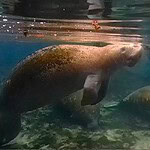
A manatee in the middle of the section after the roped-in swimming area. I watched the manatee for about thirty minutes, occasionally bobbing its head out of the water. From a distance, it looked like a baby, but that was purely an optical illusion. I’ve swum with mantatees many times before in various locations. I’ve had an entire group randomly swim over to the boat and hang out. I’ve swam with them at Three Sisters, in Kings Bay Head, and even in the intercoastal waters. What I’ve never had is a spring to myself and a manatee. Only, it got better!
Despite the cold, I immediately ran back to the RV to get my snorkeling gear and underwater camera. Rushing back down to the dock that gives you access to both the swimming area and the section that connects the spring to the river. Fannings Springs has several entry points, and all of them are easy. What I mean by easy is either a titled platform or graduated concrete platform steps.
Believe it or not, getting in a spring when it’s cold outside isn’t a shock to your body. The water is warmer than the air outside. And, let me tell you, it was worth it for this! It wasn’t just one manatee or a baby manatee, but three adults. Perhaps a family, but three fully grown sea cows.


I can’t even begin to tell you how magical this experience was for me. As I mentioned earlier, I’ve swam with them before but never solo. I floated on the top of the warm water watching the manatees bob up and down for about an hour. And, I would have likely stayed in longer were the sun not about to go down.
The manatees were not very active, and they did not want to interact with me, so I simply observed in awe. Such gentle giants, all with scars on their backs from boating accidents. Naturally, this experience has been the highlight of 2026 thus far for me. It’s a privilege to swim with these animals and one I cherish.
Note: It is illegal to harass or touch a manatee. They can come to you – and they do; however, you must not touch them.
If you’re curious which are my favorite five springs, here they are in no particular order:
- Rainbow River
- Fanning Springs
- Kings Landing
- Charles Spring
- Wes Skiles Peackock Springs
I am flirting with Juniper Springs, but I need to kayak the river run before I can say for sure if it knocks one of my favorites out of the running or if my favorites need to be amended. There are so many that I love that it’s hard to narrow them down to just a few.
If you’re curious about my least favorite, and by least favorite I mean I couldn’t care less if I ever go again, here you go:
Things To Do At Fanning Springs
Fanning Springs offers crisp swimming, short nature trails through live oaks, and river access for paddling. You’ll find clear spring water at about 72°F, picnic areas, and easy launch points for kayaks and canoes.
Swimming and Snorkeling
You’ll enter the spring from a gently sloping platform or concrete steps. The water stays about 72°F year-round. The main spring pool reaches roughly 18–21 feet at its deepest; most swimmers and snorkelers stay in shallower areas near the vent for visibility and safety.
Bring a snorkel mask and fins to see submerged limestone, aquatic plants, and small fish. Visibility is typically excellent close to the spring head, but it can drop after heavy rain or high river flow.
Fanning Springs State Park has a swimming and jumping dock that many visitors use to jump into the main, deeper part of the spring. Older high-dive platforms were taken down, but jumping is still common on a dock about 8 feet high. Very few springs still have jumping platforms today, so this is a standout feature.


You can swim in the designated spring area where clear water and steady temperature make for a refreshing dip.
Explore The Spring Head
You should make it a point to swim to the spring head and explore. My photos aren’t as perfect as they could be, and that’s because it was January and there was little to no sun. However, the spring head is easily accessed, and it’s an interesting one. There’s a sunken log in the middle of it – common in a lot of springs, and it’s not overly deep. I always view the spring heads, but some of them are too deep and dark for me to hang out for too long. Fanning Springs is different, shallow, and bright.


Fishing
Fishing from riverbanks and small-boat paddles yields species such as bass and sunfish; follow Florida fishing regulations and use catch-and-release where posted. Trails and picnic areas provide short walks and family-friendly spots, while nearby concession services offer rentals and guided river trips during peak seasons.
Picnic Areas and Facilities
Picnic tables sit beneath shade trees near the spring, offering spots for lunch or a rest between activities. Some tables are grouped for families; others provide quieter views of the water and passing paddlers. The park maintains restrooms and shower facilities so you can rinse off after swimming. Trash receptacles and recycling bins are also available.

Accessibility Features
You’ll find ADA parking spaces close to the park entrance and a paved pathway that leads toward the main spring area. The accessible route covers the primary picnic and restroom zones, though some natural surfaces (sand and boardwalks) can be uneven.
Restrooms include accessible stalls and at least one shower stall designed for mobility needs. If you require a beach wheelchair or additional assistance, contact park staff in advance to confirm availability and get detailed route information. Staff can advise on current trail conditions and alternate viewing points if sections are temporarily closed or water levels limit access.
Kayaking and Canoeing At Fanning Springs
You can launch directly from park access points onto the Suwannee River and the nearby Santa Fe River segments. Rentals and shuttle services are available from local outfitters for longer downstream paddles.
Expect calm, clear water with gentle current sections and some faster stretches depending on recent rainfall. Typical trips range from short floats under an hour to multi-mile paddles between springs and downstream take-outs.
Pack a dry bag, a life jacket, and a map or GPS; mobile service can be spotty along the river. Check with outfitters for shuttle options, suggested routes, and water-level conditions before you put in.
Walking Trails
You can walk the park’s well-marked trails that total about 1.5 miles. Trails wind under mature live oaks and palmettos, creating shaded routes ideal for morning or late-afternoon visits. Look for short interpretive loops that pass the spring head and riverside boardwalks, where you can spot turtles, wading birds, and occasional small snakes. Trails are mostly gravel and packed earth, suitable for sturdy shoes and families with older children.
Wildlife At Fanning Springs
The spring and adjacent floodplain support wading birds, turtles, and fish that rely on clean, oxygenated springflow. You’ll commonly spot herons, egrets, and occasional osprey hunting along the river edges; smaller mammals and amphibians use the shaded hammock and wetland zones.

Native vegetation includes riverfront hardwoods, swamp-tolerant trees, and aquatic grasses in the outflow run. These plant communities stabilize banks, filter runoff, and provide habitat structure. Avoid disturbing vegetation and wildlife; staying on trails and using designated access points helps protect fragile areas and maintains the park’s ecological health.
Attractions Near Fanning Springs
You can explore several natural springs and parks within a short drive of Fanning Springs. Manatee Springs State Park lies nearby and offers clear spring runs and wildlife viewing along the Suwannee River.
The Nature Coast Trail runs near Fanning Springs and offers paved sections for cycling and easy walking. It connects small towns like Chiefland and Cross City if you want a longer, low-traffic ride.
Ginnie Springs and Troy Springs are popular swimming and diving destinations a bit farther away, known for their clear water and established recreation facilities. They attract swimmers, snorkelers, and certified divers seeking freshwater cave experiences.
Fort Fanning (historic site) sits adjacent to the park and gives you a glimpse of local Civil War–era history. Interpretive signage and river views make it a quick, informative stop.

Use the town’s restaurants and small shops for supplies and casual dining after outdoor activities. Local guides and outfitters can loan or rent gear — kayaks, canoes, and bikes — for exploring the river and trails.
FAQ’s
How much does it cost to get into Fanning Springs?
Entrance to Fanning Springs is $6 vehicle (up to eight people). $4 single-occupant vehicle.
Does Fanning Springs have cabins?
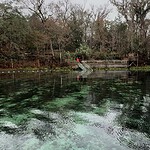
Along with a small recreational building with a deck overlooking the springs, the park offers contemporary cabins for overnight stays. For availability and pricing, please call 352-463-3420.
How deep is Fanning Springs?
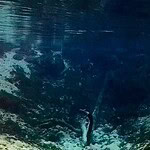
Depending on river levels, the funnel-shaped main vent of Fanning Spring, which is situated in the southeast part of the headspring, may be more than eighteen feet deep. Here, 650 million gallons of water are pumped out daily from the Floridan aquifer beneath.
Closing Thoughts
I’m obsessed with exploring springs; some I love, some I don’t, and some are ones I would not return to. That said, Fanning Springs will always be at the top of my list because of the experience I had there. And even if I had not had the pleasure of the manatees, this spring would still be on my list because it is nowhere near as crowded as others.
If you want a compact, accessible spot for swimming, paddling, wildlife viewing, and easy access to river trips and nearby state parks, Fanning Springs delivers those experiences.

Looking For More Springs? Start Here:
- Eagles Nest Sinkhole: A Wonderful And Iconic Sinkhole
- Homosassa Springs Florida
- Kings Landing, Florida, and The Iconic Emerald Cut
- Rainbow Springs State Park
- Royal Springs – Suwannee County’s Hidden Gem
- Suwannee Springs, Florida – The Oldest Spring in Florida
- Telford Springs: A Natural Wonder On The Suwannee River
- Three Sisters Springs Wildlife Refuge – Crystal River
- Troy Springs: A Guide to Florida’s Stunning Natural Wonder
- Wakulla Springs and Lodge
- Wes Skiles Peacock Springs State Park
Brit On The Move™ Travel Resources
Ready to book your next trip? Use these resources that work:
Was the flight canceled or delayed? Find out if you are eligible for compensation with AirHelp.
- Hotels: Find the best prices; use Booking.com
- Apartment Rentals: Find the best prices on apartment rentals with Booking.com’s Apartment Finder.
- Travel Insurance: Don’t leave home without it. View our suggestions to help you decide which travel insurance is for you: Travel Insurance Guide.
- Credit Cards: Check out our recommendations for Travel Credit Cards.
- Volunteer Vacation or a Working Holiday? Check out the complete guide here!
- Rental Cars: Find the best deals here!