Salt Springs, Florida: A Guide to Natural Springs and Outdoor Recreation
You don’t often hear about Salt Springs, Florida. In fact, few people know it exists, yet this is a fairly popular managed spring. Salt Springs offers an easy way to enjoy clear spring water, forest scenery, and outdoor recreation all in one destination. Located in the Ocala National Forest, the area supports swimming, snorkeling, fishing, boating, hiking, camping, and picnicking.
You can swim in the spring, paddle along Salt Springs Run, explore nearby trails, or stay overnight at the campground, which includes tent sites and full RV hookups. Before you go, learn about the location, natural features, facilities, fees, hours, and regulations to plan a smooth visit.

This post may contain affiliate links. Please read our disclosure and privacy policy for more information.
Salt Springs Location And Overview
Salt Springs is an unincorporated community in Marion County, Florida, off of Lake George and within the Ocala Metropolitan Statistical Area. You can reach the recreation area along State Road 19, where the spring, campground, trails, and water access provide the main visitor facilities. Or, you can boat in from Lake George.
Salt Springs lies in the eastern part of the Ocala National Forest, a protected landscape of pine flatwoods, hardwood forests, lakes, and wetlands. The recreation area sits at approximately 13851 State Road 19, between County Roads 314 and 316.
The spring releases mineral-rich water from an underground system at a consistent temperature of about 72°F. Its flow forms a swimming area that connects with Salt Springs Run, which continues toward Lake George. The surrounding forest offers hiking, biking, fishing, boating, and wildlife viewing, while developed facilities include restrooms, changing areas, picnic areas, and camping.
Florida Springs Etiquette – Leave No Trace Behind
It’s everyone’s right to visit Florida Springs. However, we all have a moral duty to leave them as we found them or better for others to enjoy. Here are some simple steps to ensure that our springs are kept pristine:
- Plan Ahead & Prepare: Know regulations (like springs protection zones), check the weather, and have appropriate gear.
- Travel & Camp on Durable Surfaces: Stick to trails; avoid creating new paths.
- Dispose of Waste Properly: Pack out everything (trash, food scraps, cigarette butts).
- Leave What You Find: Take photos, not plants, rocks, or shells.
- Minimize Campfire Impacts: Use designated rings and ensure fires are cold and out.
- Respect Wildlife: Observe from a distance; do not feed animals.
- Be Considerate of Others: Keep noise down and remove all personal items (chairs, toys, kayaks) daily.
Specific Florida Springs Actions
- In the Water: Don’t stand on vegetation or kick up silt; use mushroom anchors instead of hooks; trim boat motors in shallow areas; avoid landing boats on banks.
- On Shore: Fill holes in the sand; don’t climb trees or use rope swings.
- Boating: Turn off propellers when waiting for swimmers to pass to protect vegetation and wildlife.
Go The Extra Mile
- Pick up any trash others left
- Report any violators
- Report any distressed wildlife
Why Visit Salt Springs?
Why not? Seriously, while not all springs are created equal, Salt Springs is worth anyone’s attention, especially if you are boating in. The boat ride up Salt Spring Run is as beautiful as the spring. Like all springs, each has something unique that sets it apart. Salt Springs is no exception.

People visit Salt Springs to swim, snorkel, and paddle in clear spring water. Fishing also attracts visitors, especially along the spring run and nearby waterways, but check current Florida regulations and local restrictions before casting.
I wanted to visit for a few reasons. While I’ve been to many springs in this area, I hadn’t made it to Salt Springs until now. I had read mixed comments and heard from locals that most people pass this spring by because of its sulfur smell. From first-hand experience, I can tell you it doesn’t smell like sulfur. It’s also not the “bluest” of springs. Rather, it’s a very transparent pale green color. The water is crystal clear and clean; it just doesn’t have the piercing blue hues of some of the more famous ones. This is due to the sodium levels, which I think is where it got its name.
The recreation area supports both day trips and longer stays. You can reserve or use campground sites, explore nearby forest roads and trails, or combine a spring visit with time at Lake George. If you do not arrive via water vessel, no fee applies. If you enter through the park, a day-use fee applies, and operating hours, water conditions, and swimming access may change, so check current information before traveling.

Natural Features Of Salt Springs
Salt Springs combines a mineral-rich spring basin with the pine forests, wetlands, and wildlife of the Ocala National Forest. You can observe distinct water conditions in the swimming area and find a broader range of habitats along nearby trails and waterways.
Salt Springs rises through limestone and contains more dissolved minerals than many Florida springs. Potassium, magnesium, and sodium contribute to its slightly brackish character, which affects the water’s taste and feel compared with typical freshwater springs.
The spring stays near 72°F year-round, making it suitable for swimming and snorkeling in every season. The basin includes a limestone bottom, sandy patches, and aquatic vegetation. Clear water lets you see underwater features, though visibility can change with weather, use, and natural conditions.
You can explore the spring pool from the recreation area, but you should follow posted swimming and boating rules. The spring’s outflow forms a roughly 4 to 4.5-mile paddling route toward Lake George, letting you see the waterway beyond the main basin.

Salt Springs Eelgrass Restoration Project
As you approach Salt Springs from Salt Spring Run (by boat), you’ll see that some sections of the spring are roped off. If you arrive through the park, you won’t see the roped-off section until you head towards Salt River Run. When you get close to the roped-off areas, you’ll see protection cages. These cages are a part of the restoration project.
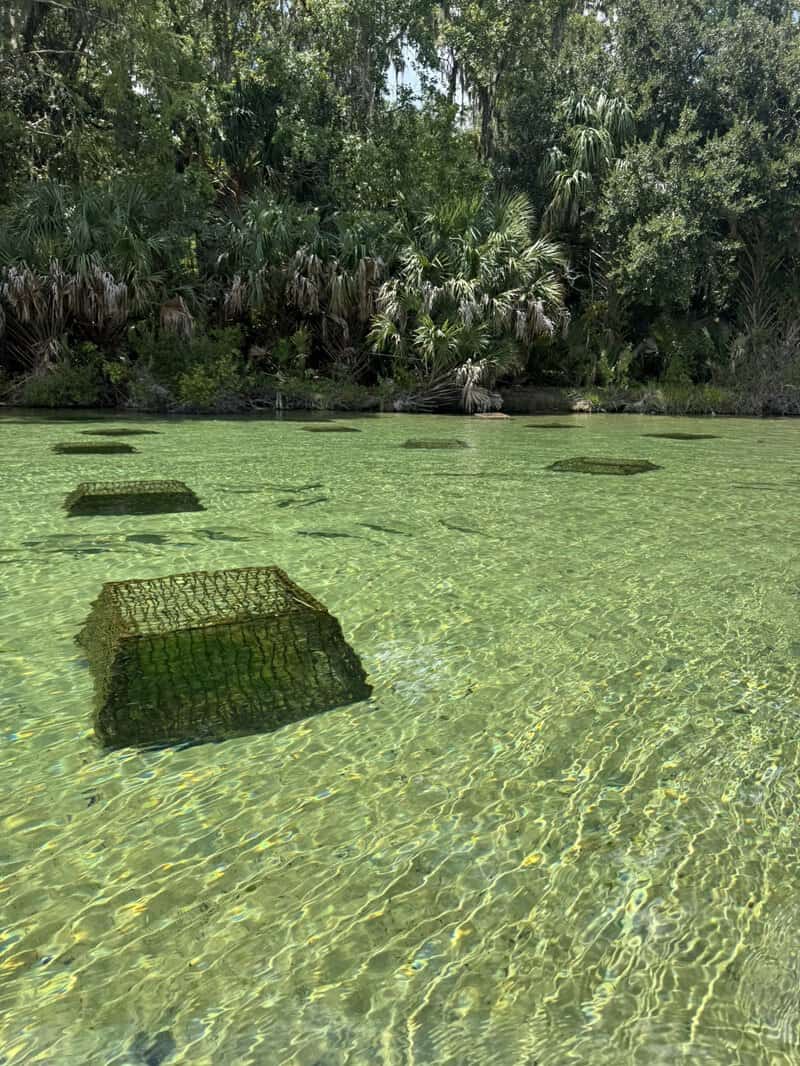
The Salt Springs eelgrass restoration project focuses on reviving native submerged aquatic vegetation in the Ocala National Forest to combat habitat loss, sedimentation, and erosion.
Project Overview & Implementation
- Partners & Leadership: Led by the U.S. Forest Service, the Florida Fish and Wildlife Conservation Commission (FWC), Naventure, and local conservation partners.
- Recent Planting Efforts: Teams recently planted over 800 bare-root eelgrass plants directly into Salt Springs to help re-establish vital underwater meadows.
- Protection Cages: Teams secured young plants inside 48 protective herbivory exclosures (cages) to shield them from grazing wildlife while they take root.
- Nursery Propagation: Local eelgrass lines are cultivated in specialized stock-tank nurseries (located nearby at centers like the Pittman Work Center) using sediment from past restoration efforts, then transplanted in the spring.
Ecological Importance
- Ecosystem Foundation: Eelgrass acts as a first line of defense against erosion, traps suspended sediment to clear the water, and provides essential food and shelter for manatees, fish, and turtles.
- Broader Regional Work: This project ties into wider restoration movements across the St. Johns River system and Lake George, where millions of native plants and protective enclosures are being deployed.

Swimming And Water Recreation
Salt Springs gives you a spring-fed swimming area, clear water, and access to Salt Springs Run. Swim and snorkel near the spring, then launch a kayak, canoe, or small boat toward Lake George and the St. Johns River system.
You can swim in the large spring-fed pool at Salt Springs Recreation Area. The water remains about 72°F year-round, making it cool in summer and refreshing during warmer months. A sandy beach surrounds much of the swimming area, giving you space to enter the water, sit near the shore, or supervise children. The sandy beach also offers a great place to land a water vessel if you arrive by water.
The recreation area provides restrooms and changing facilities. Follow posted rules, stay within marked swimming areas, and check current conditions before entering. The spring’s mineral-rich water gives it a slightly brackish character, so you may notice freshwater and marine species in the same environment.
Snorkeling And Floating
You can snorkel in the clear spring water, especially near the swimming area, where conditions usually stay calm. Bring properly fitted equipment, and avoid touching wildlife, plants, or the spring bottom. Visibility can change with weather, use, and water conditions.
A flotation device lets you relax while you observe the spring and nearby aquatic life. Use a Coast Guard-approved life jacket for children and anyone who cannot swim confidently. Keep your activity away from boat traffic and stay alert near the spring run, where currents may carry you away from the main swimming area.

Boating And Paddling Access
A boat ramp provides access to Salt Springs Run, Lake George, and the connected St. Johns River system. You can launch a kayak or canoe for a gentle paddle through the run, while small motorboats can use the broader waterways when conditions and regulations allow.
Camping And Day-Use Facilities
Salt Springs Recreation Area gives you several ways to stay overnight or spend the day in the Ocala National Forest. Choose between full-hookup RV sites and a quieter tent area, then use the spring, picnic facilities, and nearby recreation areas during daylight hours. You can reserve a campsite for an RV, trailer, or tent. Salt Springs has the forest’s only campground with full RV hookups, making it a practical choice if you need connections for extended stays.
Sites are generally shaded and positioned away from the busier day-use area. The tent-only section is a short walk from the parking area, so plan for a brief carry from your vehicle. Bring equipment suited to a wooded setting, including lighting for nighttime movement and insect protection. Camping places you close to the spring and other outdoor activities, including swimming, fishing, snorkeling, hiking, and boating.
Camping requires a separate reservation or campground fee. Salt Springs has about 160 campsites, including full-hookup RV sites and tent sites. Reserve through the official Forest Service or Recreation.gov system when available, and confirm check-in times, maximum occupancy, vehicle limits, and cancellation policies.

Entry Fees and Costs For Salt Springs
Entry to Salt Springs Recreation Area in the Ocala National Forest costs $14.50 per person plus tax (children 5 and under are free), and primitive camping starts at $46 per night with a $7 online reservation fee via Recreation.gov.
Now, $14.50 per person is ridiculously high for any spring, and this per-person charge is unheard of in most state parks. Most state parks have a per-car fee, so this is even more absurd. The only other springs in this price range are Ginnie, Devils Den, and Warm Mineral Springs Park. Of these, Ginnie and Devils Den are privately owned.
Day Use and Admission Fees
- Day-Use Admission: $14.50 per person plus tax (children 5 and under are free).
- Boat Launch Fee: $21.50.
- Spring Hopper Annual Pass: $80 per person, which covers day-use entry at Salt Springs, Alexander Springs, Juniper Springs, Silver Glen Springs, Clearwater Lake, and Wildcat Lake. Note that standard Florida State Park passes are not valid here.
Note: If you travel in by water on Salt River Run rather than through the park, it’s completely free. Plus, several sandbars on the run are yours to claim.

Trails And Outdoor Activities
Salt Springs gives you access to forest trails, spring-fed water, and varied wildlife habitat within the Ocala National Forest. Combine a short interpretive walk with swimming, paddling, fishing, boating, or wildlife observation.
The 1.9-mile Salt Springs Wildlife Observation Trail offers an accessible introduction to the Big Scrub ecosystem. Interpretive signs identify native plants such as sand live oak, Chapman oak, myrtle oak, southern magnolia, and saw palmetto. Some sections involve steep climbs, so wear sturdy shoes and carry water, especially in warm weather.
Best Times To Visit Salt Springs
You can swim in Salt Springs year-round because the spring remains about 72°F. Summer brings hot, humid weather, afternoon thunderstorms, and larger crowds, especially on weekends and holidays. Arrive early for easier parking and a quieter swim.
Spring and fall usually provide comfortable temperatures for hiking, paddling, and camping. Winter offers cooler air and fewer visitors, although mornings can feel cold after swimming. Check current conditions, entrance fees, operating hours, swimming access, and campground availability before traveling. The area may limit access when parking is full, or weather makes conditions unsafe.
Attractions Near Salt Springs
Salt Springs sits within the Ocala National Forest, which gives you access to additional springs, forest roads, trails, and waterways. Silver Glen Springs, roughly a half-hour drive away, offers clear swimming water and paddling access toward Lake George. Juniper Springs, about 30 minutes west, is known for its swimming area, historic mill, and scenic canoe run. You can also visit Alexander Springs, about 40 minutes away, for swimming, snorkeling, and forest trails.
Closing Thoughts
If you can access Lake George and navigate up through Salt River Run, this is a great spring to explore at least once. It has a much quieter and tamer vibe than its neighbor, Silver Glen. That said, I would never pay $14.50 per person to access this spring through the park. It’s not worth the cost, especially when you consider the free or per-car options we have. It’s also not the most visually stunning spring. It’s also a shallow spring, which could be a huge pro for kids. Lastly, it is not jam-packed- even on a weekend.
Here are some of the most popular springs in Florida:
- Crystal River & Three Sisters Springs
- Homosassa Springs Florida
- Kelly Park – Rock Springs
- Kings Landing, Florida, and The Iconic Emerald Cut
- Rainbow Springs State Park
- Royal Springs – Suwannee County’s Hidden Gem
- Silver Glen Springs, Florida
- Silver Springs – One Of Florida’s Most Famous Springs
- Suwannee Springs, Florida – The Oldest Spring in Florida
Brit On The Move™ Travel Resources
Ready to book your next trip? Use these resources that work:
Was the flight canceled or delayed? Find out if you are eligible for compensation with AirHelp.
- Hotels: Find the best prices; use Booking.com
- Apartment Rentals: Find the best prices on apartment rentals with Booking.com’s Apartment Finder.
- Travel Insurance: Don’t leave home without it. View our suggestions to help you decide which travel insurance is for you: Travel Insurance Guide.
- Credit Cards: Check out our recommendations for Travel Credit Cards.
- Volunteer Vacation or a Working Holiday? Check out the complete guide here!
- Rental Cars: Find the best deals here!